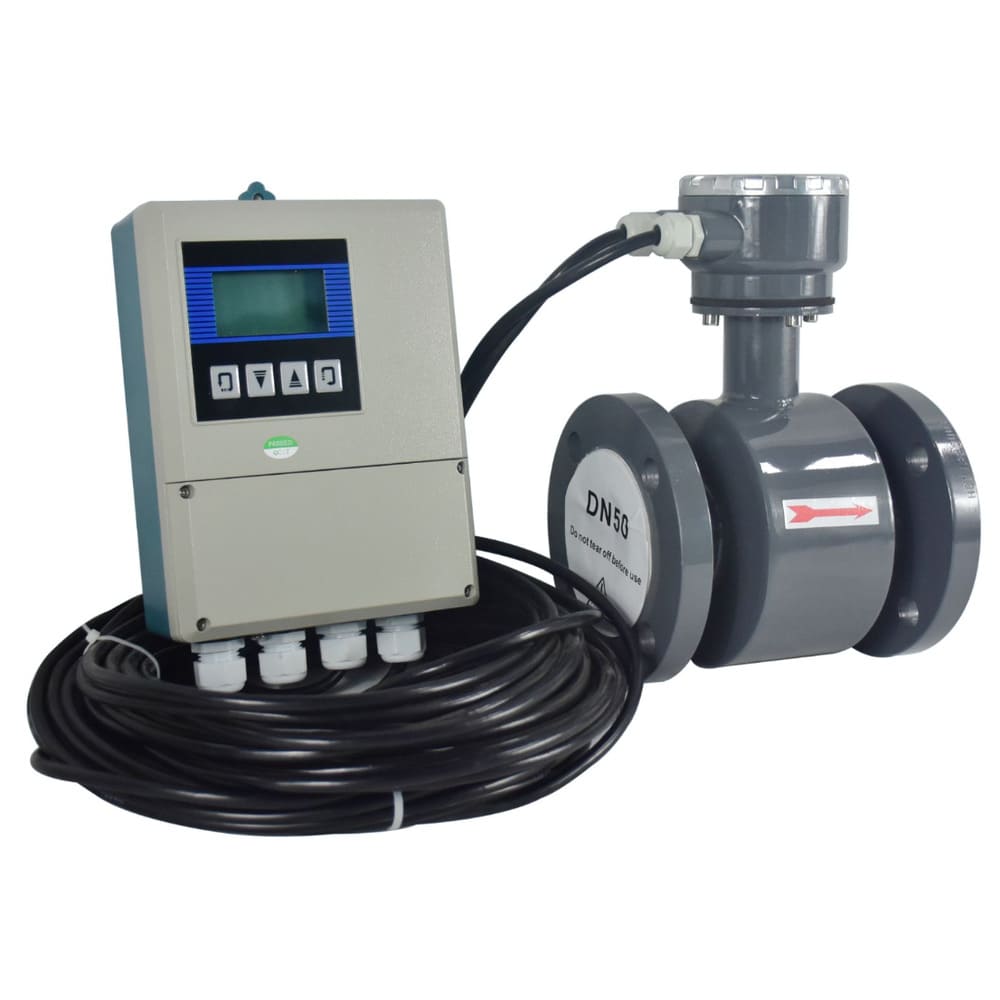
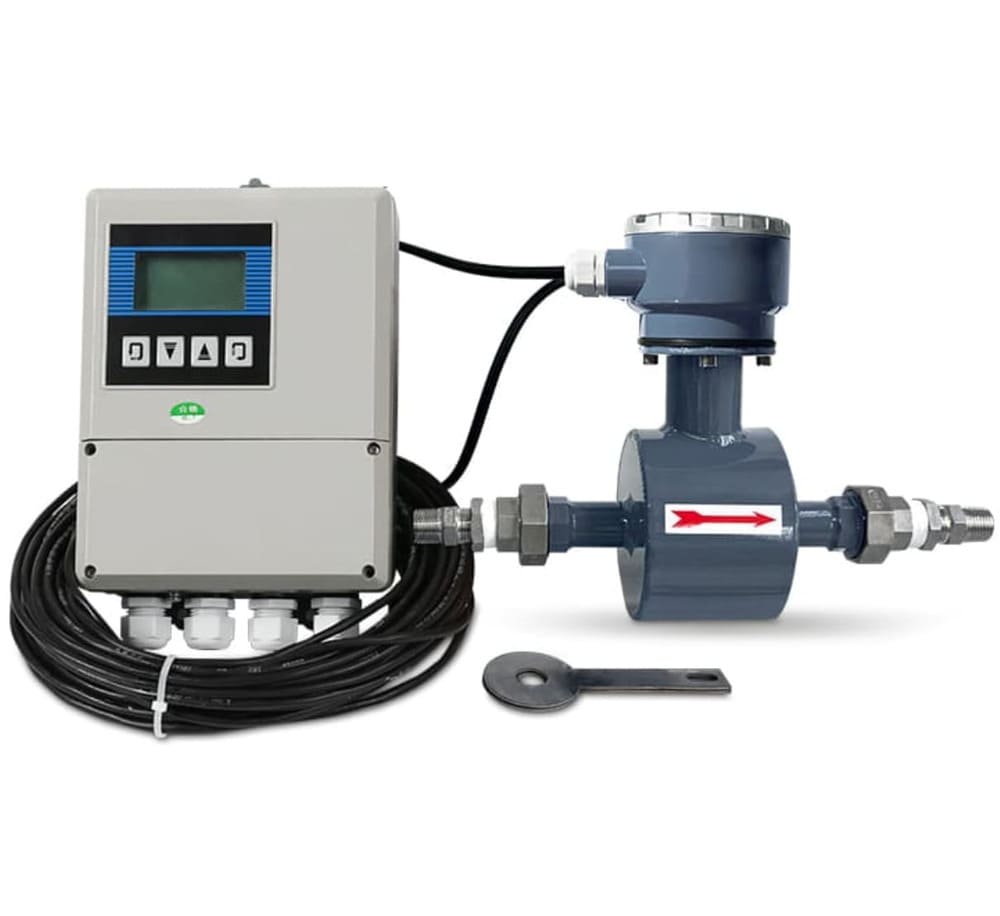
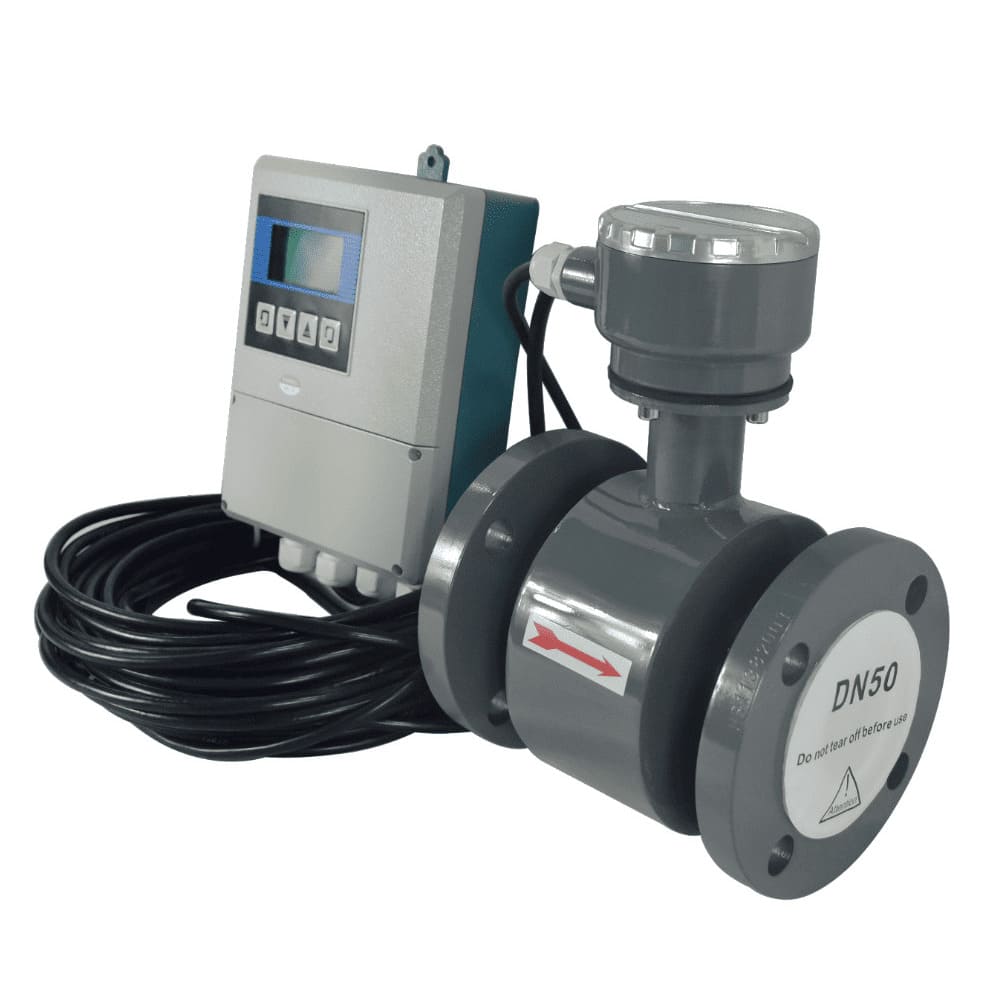
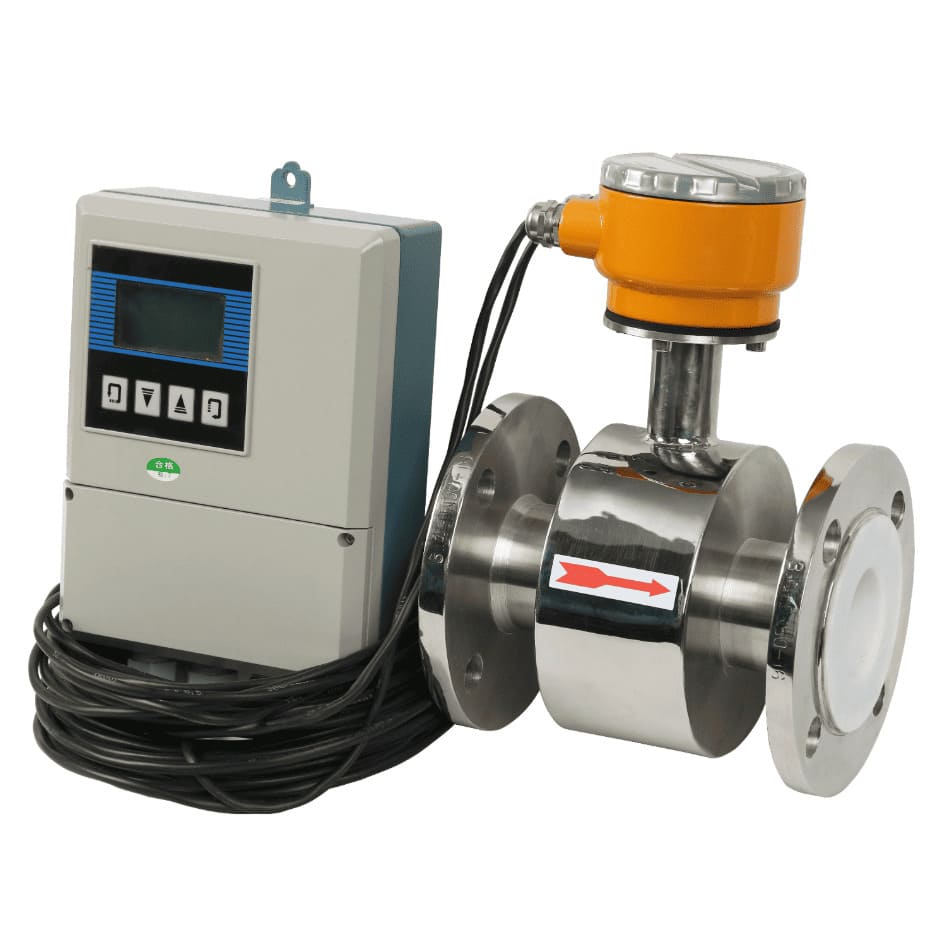
Split Type Electromagnetic Flowmeter
When process conditions threaten flowmeter electronics—temperatures exceeding +60°C, pump vibration, corrosive vapors, or hazardous area classifications—split configuration protects the converter in a safe location while the rugged sensor remains at the measurement point, connected by cable up to 100 meters for ±0.3% accuracy, control room calibration access, and triple the equipment lifespan of integrated designs.
- Pipe Size: DN10 – DN3000
- Cable Length: Up to 100m (sensor to converter)
- Flow Accuracy: ±0.3% / ±0.5% of reading
- Velocity Range: 0.05 – 15 m/s
- Temperature: -25°C to +180°C (liner dependent)
- Protection: Sensor IP65/IP67/IP68, Converter IP65
Request a QuoteTechnical Consultation
Protect Electronics, Simplify Maintenance, Extend Service Life
Five reasons remote converter mounting outperforms integrated flowmeters in demanding applications
- 3x longer converter service life—15-20 years vs. 5-7 years
- 80-90% faster maintenance—control room access vs. field access
- 40-60% cost reduction with multi-sensor converters
- 50-70% lower hazardous area compliance costs
- Future-proof sensor investment through technology evolution
When to Specify Split vs. Integrated Configuration
Choose Split Type When:
- Process temperature >+60°C (exceeds converter ambient rating)
- Heavy vibration from pumps or reciprocating equipment
- Corrosive atmosphere (H₂S, Cl₂, chemical vapors)
- Difficult sensor access (underground vault, elevated pipe, confined space)
- Hazardous area installation (Division 1/Zone 1)
- Multiple sensors to centralized control room
- Converter technology upgrade path required
Choose Integrated Type When:
- Installation cost minimization priority (no cable, less labor)
- Benign process environment (<+60°C, no vibration, no corrosive atmosphere)
- Local display reading required at sensor location
- Small pipe sizes (DN10-DN50) where integrated is standard
- Temporary or portable measurement applications
Parameter | Specification |
|---|---|
Measurement Principle | Electromagnetic (Faraday's Law) - full-bore velocity measurement |
Configuration | Split type: sensor and converter as separate units |
Pipe Size Range | DN10 – DN3000 (custom sizes available) |
Flow Accuracy | ±0.3% of reading (custody transfer) | ±0.5% of reading (standard) |
Repeatability | ±0.05% of reading |
Velocity Range | 0.05 – 15 m/s (bidirectional) |
Fluid Temperature | -25°C to +80°C (rubber liner) | -25°C to +180°C (PTFE/PFA) |
Ambient Temperature | 25°C to +80°C |
Pressure Rating | 0.6 – 4.0 MPa (standard) | Up to 10 MPa (custom) |
Conductivity Requirement | ≥ 5 μS/cm (≥20 μS/cm recommended) |
Power Supply | 85-265V AC (50/60Hz) | 12-36V DC |
Output Signals | Modbus RTU/TCP, HART, Profibus DP, Foundation Fieldbus, EtherNet/IP |
Converter Display | Backlit LCD or OLED: flow rate, totals, velocity, diagnostics, alarms |
Protection Rating | Sensor: IP65/IP67/IP68 | Converter: IP65 (wall-mount enclosure) |
Diagnostics | Empty pipe detection, electrode fouling, excitation monitoring, self-test |
Explosion-Proof | SIL-3 Certification |
Quality Standards | CE Certification |
Liner & Electrode Material Selection Guide
Materials Engineered for Slurry Service
Specialized materials resist abrasion and erosion in liquid-solid two-phase flow
Liner Materials Table:
Lining Material | Temperature Range | Chemical Resistance | Best Applications |
|---|---|---|---|
NBR (Nitrile Rubber) | -25°C to +80°C | Good for water, mild acids/alkalis | Water, wastewater, neutral process fluids |
EPDM | -25°C to +95°C | Excellent for hot water, steam | Hot water, cooling water, food/beverage |
PTFE | -25°C to +180°C | Universal chemical resistance | Strong acids, alkalis, solvents, high-temperature chemicals |
PFA | -25°C to +180°C | Superior to PTFE for gas permeation | Ultra-pure chemicals, semiconductor, pharmaceutical |
FEP | -25°C to +150°C | Excellent chemical + abrasion | Slurries, chemical processes, abrasive fluids |
PO (Polyolefin) | -25°C to +60°C | Resistant to oxidizing acids | Hypochlorite, hydrogen peroxide, ozone water |
Electrode Materials Table:
Electrode Material | Erosion Resistance | Typical Applications |
|---|---|---|
316L Stainless Steel | General purpose | Water, wastewater, neutral chemicals |
Hastelloy B | Non-oxidizing acids | Hydrochloric acid, sulfuric acid (reducing) |
Hastelloy C | Oxidizing and reducing environments | Chlorine, wet Cl₂, ferric chloride, hypochlorite |
Titanium | Chlorides, seawater | Sodium hypochlorite, chlorine dioxide, seawater |
Tantalum | Extreme corrosion | Concentrated acids, aqua regia, extreme pH |
Platinum-Iridium | Universal resistance | Ultra-pure water, pharmaceutical, research |
Protection Class Section:
Sensor Protection:
- IP65: Dust-tight, water jet resistant (indoor/protected outdoor)
- IP67: Dust-tight, temporary immersion to 1m (outdoor, occasional flooding)
- IP68: Dust-tight, continuous submersion to 3m (underground vaults, permanent submersion)
Converter Protection:
- IP65 (Standard): Wall-mount enclosure, indoor or weather-protected outdoor
- IP54 (Panel-mount): Control room installation
Split Configuration Advantages for Industrial Processes
Remote converter mounting solves challenges in harsh, hazardous, and high-temperature applications
Chemical & Petrochemical
- Reactor feed and discharge
- Acid/alkali transfer lines
- Solvent and reagent metering
- Heat exchanger flow monitoring
- Hazardous chemical handling
- High-temperature process streams
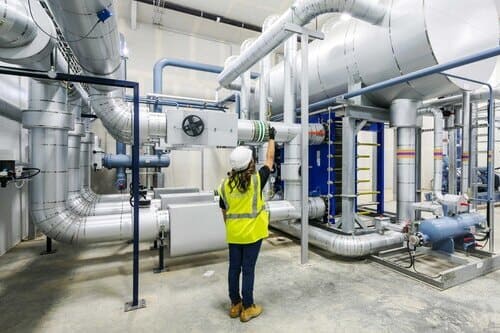
Oil & Gas Production
- Produced water measurement
- Injection water flow
- Chemical injection metering
- Process water systems
- Cooling water circuits
- Hazardous area installations (Division 1/Zone 1)
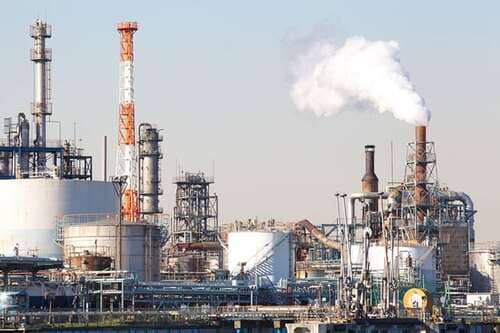
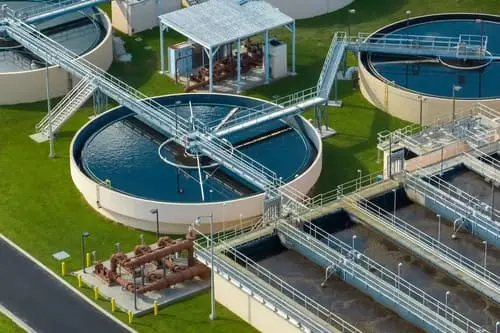
Water & Wastewater Treatment
- Chemical dosing verification
- Sludge transfer metering
- Filtration process control
- Disinfection chemical feed
- Treated effluent discharge
- Underground wet well installations
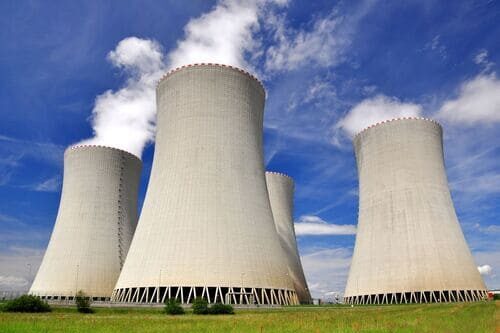
Power Generation
- Cooling tower circulation
- Condenser water flow
- Boiler feed water
- Waste heat recovery
- Chemical injection systems
- Auxiliary cooling systems
Pharmaceutical & Food Processing
- WFI (Water for Injection) systems
- CIP (Clean-in-Place) monitoring
- Ingredient dosing
- Sterile water distribution
- High-purity chemical transfer
- Sanitary applications

Proper installation ensures long service life and measurement accuracy
Critical Installation Requirements
1. Pipe Orientation
Install on horizontal or vertical upward-flowing pipe sections to prevent solids settlement. For horizontal pipes, position electrodes on horizontal centerline (3 and 9 o’clock) to avoid electrode coating by settled solids.
2. Straight Pipe Requirements
- Upstream: 5D minimum (10D preferred for heavy slurries)
- Downstream: 2D minimum
- Where D = pipe diameter
3. Flow Direction
Arrow on sensor body must align with slurry flow direction. Reversed flow will cause negative readings and potential electrode damage.
4. Grounding
Essential for accurate measurement. Use grounding rings for non-conductive pipes. Ensure electrical continuity between slurry and sensor electronics.
5. Location Selection
- Avoid pump suction side (risk of negative pressure)
- Install on pump discharge side where slurry is fully mixed
- Avoid high points where gas can accumulate
- Accessible location for maintenance and electrode inspection
Pipe Material Considerations
- Steel or Lined Steel Pipes: Direct flange mounting. Verify coating inside pipe does not create grounding path issues.
- Rubber-Lined or Polymer-Lined Pipes: Use grounding rings or electrodes. Consult factory for proper grounding configuration.
- Slurry-Specific Requirements: For coal slurry, install with slight upward slope (2-5°) to prevent settlement. For high-concentration mineral slurries, consider full-bore ball valves for isolation (gate valves trap solids)
Reliable Flow Measurement for Your Most Demanding Process Applications
We'll specify liner materials, electrode selections, and accuracy classes that match your fluid properties, flow ranges, and regulatory compliance requirements.
info@hbmeter.cc
(+86) 152-3780-0315
1 Jingsan North Road, Xiangfu District, Kaifeng, Henan 475004 China
About HBmeter
HBYB is a specialized flow instrumentation brand combining engineering depth, continuous product innovation, and practical industry experience to deliver reliable flow measurement solutions for demanding industrial applications.