
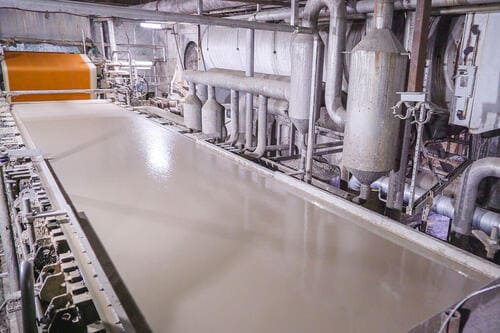
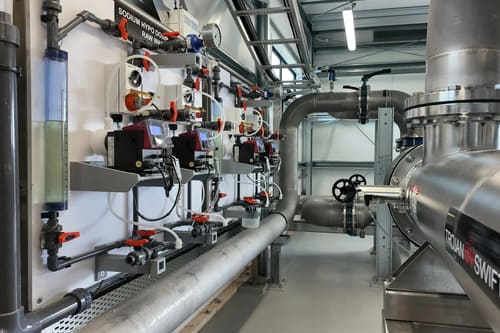
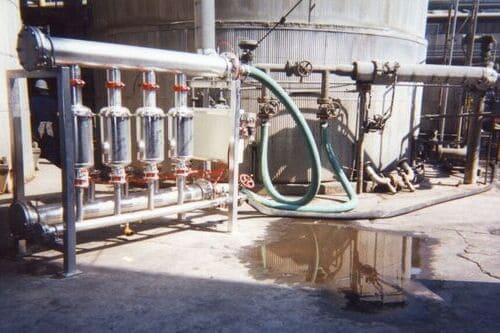
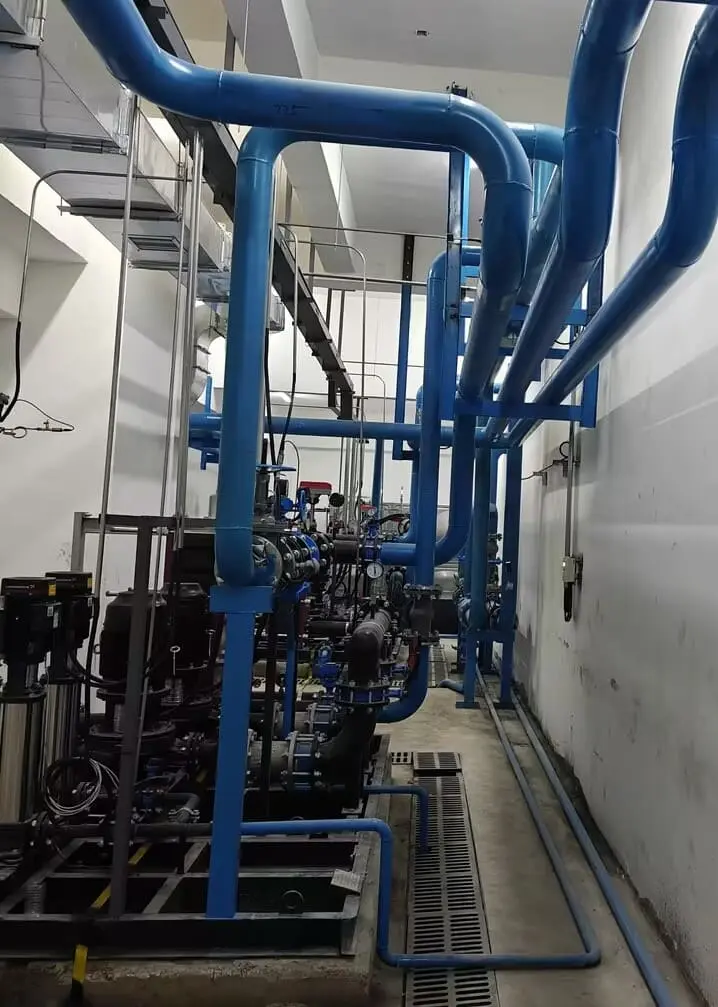
Pulp & Paper Industry Solutions

Every process stream in a pulp and paper mill has different measurement requirements

From digester black liquor and bleach chemical dosing to paper machine stock, dryer steam, and effluent treatment — HBYB instruments handle the abrasive, corrosive, and high-consistency fluids that define pulp and paper operations.
Discuss Your Application
Industry Segments We Support

From Pulpwood to Finished Product — Covering the Full Mill Process

Pulp and paper mills operate multiple distinct process stages simultaneously, each with different fluid properties and measurement priorities. HBYB's product range covers all of them.

Chemical Pulping (Kraft & Sulfite)

Digester liquor measurement, black /white /green liquor circuits, and chemical recovery systems including evaporators, recovery boiler, and causticizing.
Digester liquors
Chemical recovery
Causticizing
Evaporation

Bleaching & Fiber Preparation

ECF and TCF bleach sequence chemical dosing, pulp washing, screening, cleaning, and refining ahead of the paper machine approach flow system.
ECF/TCF bleaching
ClO₂ dosing
Pulp washing
Refiner feeds

Paper Machine & Coating

Approach flow and headbox metering, white water recirculation, coating color supply, starch sizing, and wet-end chemistry dosing on the paper machine.
Approach flow
Headbox control
Coating kitchen
Wet-end additives

Mechanical & Recycled Fiber

TMP and CTMP refiner throughput, DIP (deinked pulp) plant water and chemical measurement, and recycled fiber screen room stock flow monitoring.
TMP/CTMP refining
Deinking plant
Recycled stock
Screen room

Steam & Condensate

Process steam to digesters, multiple-effect evaporators, drying cylinders, and lime kilns; condensate return monitoring and steam trap efficiency management.
Drying steam
Condensate return
Energy sub-metering

Water Management & Effluent

Fresh water intake, process water distribution, white water recovery, effluent treatment plant metering, and environmental discharge compliance monitoring.
Fresh water intake
Effluent treatment
white water recovery
What Flow Measurement Covers

Three Distinct Fluid Categories Requiring Different Measurement Approaches

A pulp and paper mill handles three fundamentally different fluid types in parallel — each requiring different instrument technologies, materials, and measurement principles.
Why instrument selection is critical in pulp & paper

The wrong meter in a pulp mill isn't just inaccurate — it erodes, clogs, or corrodes within months. Matching instrument to fluid properties determines whether a meter survives a 5-year maintenance interval or fails in 6 months.

Measurement Challenges

Six Conditions That Define Instrument Selection in Pulp & Paper

Each condition causes a specific, predictable failure mode when overlooked in instrument selection.

Fiber content disqualifies most common meter types

Pulp suspension at any consistency clogs DP meter impulse lines and destroys turbine bearings within weeks. Vortex bluff bodies accumulate fiber wrapping that shifts the meter's K-factor. Electromagnetic meters have no obstruction elements in the bore — fibers pass through without accumulation, and there is no internal geometry change that would alter calibration over time.
If overlooked: Turbine and DP meters on pulp lines require maintenance within 1–3 months. An EM meter on the same line runs for years without intervention.

Black liquor and cooking liquors attack standard materials

Black liquor (pH 11–13, 160°C, sodium sulfide) and white liquor (strong NaOH + Na₂S) corrode carbon steel and attack standard 316SS electrodes within months. Instrument wetted materials must be specified for each liquor stream individually — PTFE or polyurethane linings, Hastelloy C or titanium electrodes — based on the actual chemistry, temperature, and solids content.
If overlooked: Electrode corrosion shifts the meter's signal gain silently. The meter appears to function while reading progressively further from actual flow — an undetectable calibration drift.

Bleach chemicals oxidize materials that handle other mill streams

ClO₂, ozone, and hydrogen peroxide are strong oxidizers that destroy rubber linings and attack standard stainless electrodes. A meter specified for white liquor service is not automatically suitable for a bleach stage — the material set must be re-specified for the oxidizing environment specifically. Tantalum or platinum-iridium electrodes and PTFE or PFA linings are required for strong oxidizer bleach chemical service.
If overlooked: Liner degradation in a bleach stage can contaminate the pulp with corrosion products — a product quality failure that may not be detected until the finished paper is tested.

Steam is the dominant energy cost — and the least accurately measured utility

In most pulp and paper mills, steam accounts for 60–80% of total energy cost. Yet many mills operate with steam metering only at the boiler header, with no sub-metering by process consumer. Without sub-metering, steam trap failures — which can lose 2–5 tonne/hour of steam per failed trap — remain invisible. Vortex meters on each major steam consumer require no maintenance on the flow element and provide the sub-metering data that identifies losses.
If overlooked: A single failed steam trap draining 2 tonnes/hour represents 17,500 tonnes/year of lost steam — invisible without a downstream sub-meter.

Chemical dosing accuracy determines both product quality and chemical cost

White liquor dosing to the digester directly sets the H-factor and pulp yield. Bleach chemical dosing determines brightness and kappa number. Coating color formulation determines surface quality. In all three, under-dosing fails quality targets; over-dosing wastes expensive chemicals. The measurement precision at each dosing point has a directly calculable commercial value that in most cases exceeds the cost of the instrument within the first year of operation.
If overlooked: A 3% over-dosing error on white liquor at a 1,000 t/day Kraft mill represents a significant chemical cost increment over a 365-day year — far exceeding the installed cost of a precision dosing meter.

White water carries fibers and fillers that complicate measurement

White water from the paper machine wire section contains fine fibers, calcium carbonate or kaolin fillers, and starch at concentrations that vary with machine speed and furnish. These suspended solids cause impulse line blockage in DP meters and bearing wear in turbine meters. Electromagnetic meters handle white water without obstruction elements, covering the full fiber and filler concentration range without calibration impact.
If overlooked: DP meter impulse lines on white water circuits block repeatedly, requiring manual clearing that interferes with production and provides intermittent measurement rather than continuous data.

Fluid Measurement Coverage Map

Where Flow Measurement Occurs Across the Pulp & Paper Mill

From wood yard through paper machine to finished reel and effluent discharge — this map shows which fluid streams require measurement at each process stage.
Stage 01
Fiber Preparation & Digestion
White liquor to digester
Black liquor outlet
Steam to digester
EM — liquor flows
Vortex — steam
Stage 02
Washing, Screening & Bleaching
Pulp stock
Bleach chemicals
Wash water
EM — stock & water
Coriolis — additives
Stage 03
Stock Preparation & Paper Machine
Thin & thick stock
White water
Machine showers
EM — all stock flows
Slurry EM — thick
Stage 04
Drying, Coating & Finishing
Dryer steam
Starch & coating color
Condensate return
Vortex — steam
Coriolis — coating
EM — starch / cond.
Stage 05
Recovery, Utilities & Effluent
Evaporator steam
Effluent to treatment
Process water
Multivariable Vortex
EM / open channel
Clamp-On (large DN)
Electromagnetic (Magnetic) Flowmeter
Vortex & Multivariable Vortex
Coriolis Mass Flowmeter
Clamp-On Ultrasonic
Slurry-Type Magnetic Flowmeter

Application-to-Instrument Guide

Find the Right Flowmeter for Your Process

Select the fluid category that matches your measurement task. Each card explains the selection rationale and links directly to the product specification page.
01 - Coating color supply

High-solids coating color to blade coaters, curtain coaters, and rod coaters

Coating colors are complex slurries of pigments (kaolin, CaCO₃), binders (latex, starch), and rheology modifiers at 60–70% solids. They are non-Newtonian and highly abrasive — turbine meters erode within weeks. Coriolis meters measure coating color mass flow directly, immune to viscosity variation, while simultaneously monitoring density as a real-time indicator of solids content and formulation consistency.
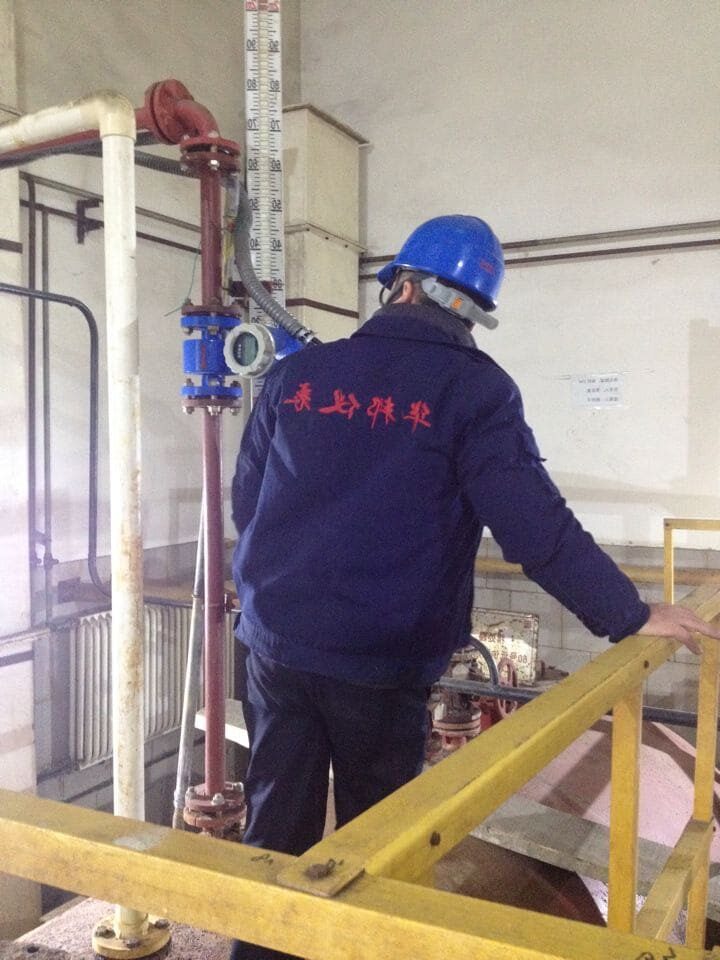

Best fit: Coating kitchen supply, blade coater dosing, curtain coater supply, coating color recirculation loops.
60–70% solids
Viscosity-immune
Mass + density simultaneously
Integrated Magnetic Flowmeter →
02 - High-consistency & abrasive pulp

Thick stock from refiners, storage towers, and high-consistency pulp transfer lines

Above 8% consistency, pulp behaves as an abrasive slurry. Standard linings erode rapidly; turbine and vortex meters fail mechanically. Slurry-type electromagnetic meters are specifically engineered for this service — hard rubber or ceramic-filled PU linings resist fiber and filler abrasion, while the full-bore design maintains calibration as consistency varies.

Best fit: Thick stock transfer (8–15%+), refiner feed and discharge, storage tower outlets, abrasive filler slurry lines.
8–15%+ consistency
Full-bore design
Abrasion-resistant lining
Sanitary Magnetic Flowmeter →
03 - Black liquor from digester

Hot, alkaline black liquor from continuous or batch digesters and pre-evaporator feed

Black liquor exits the digester at 150–180°C with pH 12–14 and dissolved organics that scale on internal surfaces. Standard rubber linings degrade at these temperatures; carbon steel electrodes corrode within weeks. Electromagnetic meters with PTFE linings and Hastelloy C or titanium electrodes provide long-term compatibility with both the temperature and the aggressive chemistry.

Best fit: Digester liquor outlet, pre-evaporator feed, weak and strong black liquor circuits.
150–180°C service
PTFE lining
Hastelloy C electrodes
Integrated Magnetic Flowmeter →
01 - Cooking liquors

White liquor, green liquor, and caustic supply to digesters and causticizing

White liquor (NaOH + Na₂S, pH 13–14) and green liquor (Na₂CO₃ + Na₂S) are strongly alkaline and attack standard 316SS electrodes. Measuring white liquor dosing to the digester directly determines pulp yield and kappa number — an accuracy requirement with direct commercial value. PTFE-lined EM meters with Hastelloy C or titanium electrodes are the correct material specification for these streams.

Best fit: White liquor to digester, green liquor to causticizers, NaOH supply, liquor make-up systems.
pH 13–14
PTFE lining
Hastelloy C / Ti electrodes
Integrated Magnetic Flowmeter →
02 - Bleach chemicals

ClO₂, H₂O₂, NaOH, and O₂ dosing to ECF and TCF bleach sequences

Bleach chemicals are strong oxidizers that destroy rubber linings and attack standard electrodes. The dosing ratio to pulp kappa number determines final brightness — over-dosing damages fiber and wastes expensive chemicals; under-dosing fails brightness targets. PTFE or PFA linings with tantalum or platinum-iridium electrodes provide the material compatibility that bleach chemical service requires.

Best fit: ClO₂ towers, peroxide (Ep) stages, oxygen delignification (O stage), caustic extraction.
Strong oxidizer
PTFE / PFA lining
Tantalum / Pt-Ir electrodes
Integrated Magnetic Flowmeter →
03 - Low-flow chemical dosing

Precision dosing of biocides, retention aids, defoamers, and wet-strength agents at very low flow rates

Wet-end additives operate in the 10–500 mL/min range, below the sensitivity threshold of standard bore electromagnetic meters. Coriolis meters measure mass flow accurately at these ultra-low rates, immune to fluid density variation — and their direct mass output eliminates the density correction that volumetric meters require when fluid concentration changes.

Best fit: CPAM retention dosing, biocide injection, defoamer supply, wet-strength resin dosing.
From DN6 bore
Direct mass output
10–500 mL/min
Density-independent
Coriolis Mass Flowmeter →
01 - Dryer section & evaporator steam

Saturated steam supply to dryer cylinders, multiple-effect evaporators, and digester indirect heating

Steam is the dominant energy cost in pulp and paper, representing 60–80% of total mill energy. Vortex meters sub-meter steam to each major consumer — enabling energy cost allocation by process unit, identifying steam trap failures (which can lose 2–5 t/hr per failed trap), and providing the data needed for energy efficiency programs. No moving parts means no scheduled maintenance on the flow element.

Best fit: Dryer section headers, evaporator steam supply, digester steam, lime kiln steam, drying section sub-metering.
No moving parts
Saturated & superheated
Up to 350°C
Energy sub-metering
Flanged Vortex Flowmeter →
02 - Steam with direct energy output

Boiler header and main steam distribution requiring direct steam mass flow and energy output

Where steam billing, energy management reporting, or ERP system integration requires direct mass flow (kg/h) or energy output (kW) — without a separate flow computer — multivariable vortex meters integrate temperature and pressure measurement in one instrument. A single process connection delivers all three measurements: volume flow, mass flow, and energy delivery rate simultaneously.

Best fit: Main boiler steam header, high-pressure steam let-down stations, energy management reporting points requiring direct mass/energy output.
Integrated T&P sensors
Direct kg/h or kW output
No external flow computer
Multivariable Vortex Flowmeterr →
03 - Condensate return

Dryer condensate and heat exchanger condensate return monitoring

Condensate from dryer cans and process heat exchangers is hot, clean water that can be returned to the boiler if its flow and quality are monitored. Comparing condensate return flow against steam supply identifies condensate recovery losses and steam trap failures in real time. Electromagnetic meters measure hot condensate accurately — it is conductive — with zero pressure drop that avoids back-pressure on dryer differential pressure control.

Best fit: Dryer condensate headers, heat exchanger condensate return, flash tank condensate outlet.
Conductive hot water
Zero pressure drop
High-temp service
Trap failure detection
Integrated Magnetic Flowmeter →
01 - Fresh water & process water

Fresh water intake and process water distribution to mill operations and zone sub-metering

A pulp and paper mill uses 10–50 m³ of water per tonne of product. Sub-metering water supply to each production area enables water reduction programs, identifies distribution leaks, and supports environmental reporting. Electromagnetic meters are the standard — clean water, zero obstruction required, with the full-bore design preventing any long-term fouling from trace fiber carryover.

Best fit: Fresh water intake, process water headers, machine shower water supply, zone sub-metering for water reduction programs.
Full bore
Zone sub-metering
±0.5% accuracy
Environmental reporting
Integrated Magnetic Flowmeter →
02 - White water recovery & recirculation

Wire pit, saveall, broke pulper, and white water tower circuits on the paper machine

White water carries fine fibers, calcium carbonate or kaolin fillers, and starch at concentrations that vary with machine speed. DP meter impulse lines block repeatedly on this service; turbine meters foul on filler accumulation. Electromagnetic meters handle fiber and filler content without obstruction, supporting continuous mass balance data for white water management and fiber recovery efficiency tracking.

Best fit: Wire pit pump discharge, saveall outlet, broke pulper recirculation, white water tower distribution.
Fibers & fillers tolerated
No line blockage
Continuous mass balance
Integrated Magnetic Flowmeter →
03 - Effluent & open drainage

Primary and secondary treatment plant inlet, effluent discharge, and open-channel drain systems

Mill effluent flows to primary clarifiers, biological treatment, and final discharge under regulated permit conditions. Full-bore electromagnetic meters cover pressurized effluent lines. For floor drainage channels and partially-filled pipes common in paper mills, partially-filled magnetic flowmeters or open-channel magnetic flowmeters measure non-pressurized flow — meeting environmental discharge metering requirements without requiring a pressurized system

Best fit: Effluent treatment plant inlet, secondary clarifier feed, final discharge point, open floor drainage channels.
Open-channel option
Partially-filled pipe option
Environmental compliance
Conductive effluent
Magnetic Open Channel Flowmeter →
04 - Large-pipe retrofit

Adding metering to existing large-diameter water mains without pipe cutting or process shutdown

Many mill water supply and distribution headers (DN400+) were built without metering. Installing full-bore meters requires pipeline shutdown. Clamp-on ultrasonic meters install on the pipe exterior with no penetration, no process interruption, and no structural modification — the practical choice for water audit surveys and permanent sub-metering on established infrastructure.

Best fit: Large-bore process water mains (DN400+), cooling water headers, existing infrastructure retrofit.
No pipe penetration
No process shutdown
Temporary or permanent
DN400+ coverage
Clamp-On Ultrasonic Flowmeter →
01 - Coating color supply

High-solids coating color to blade coaters, curtain coaters, and rod coaters

Coating colors are complex slurries of pigments (kaolin, CaCO₃), binders (latex, starch), and rheology modifiers at 60–70% solids. They are non-Newtonian and highly abrasive — turbine meters erode within weeks. Coriolis meters measure coating color mass flow directly, immune to viscosity variation, while simultaneously monitoring density as a real-time indicator of solids content and formulation consistency.

Best fit: Coating kitchen supply, blade coater dosing, curtain coater supply, coating color recirculation loops.
60–70% solids
Viscosity-immune
Mass + density
No abrasion of sensor
Coriolis Mass Flowmeter →
02 - Starch sizing

Cooked starch solution from the cooking station to the size press or film press

Cooked starch is conductive and moderately viscous (30–200 cP). Electromagnetic meters are the cost-effective choice — the full-bore design prevents starch gel accumulation on internal surfaces, and no moving parts eliminates the bearing fouling that grounded starch causes in turbine meters. The ±0.5% accuracy of EM meters supports consistent add-on control at the size press.

Best fit: Starch cooker supply, size press supply, film press starch, surface sizing circuits.
±0.5% accuracy
Low-to-medium viscosity
Full bore — no starch build-up
Integrated Magnetic Flowmeter →
03 - Wet-end retention chemistry

Micro-flow dosing of CPAM, bentonite systems, and specialty wet-end chemicals

Retention system chemicals are dosed in the 50–2,000 mL/min range. Standard bore EM meters lack sensitivity at these flow rates. Small-bore Coriolis meters or threaded electromagnetic meters (DN6–DN15) cover this range precisely — Coriolis with direct mass output, threaded EM for conductive aqueous chemicals where volumetric measurement is sufficient and cost is the constraint.

Best fit: CPAM/bentonite retention dosing, fixative injection, pitch control chemicals, sizing agent supply.
mL to L/min
Mass or volumetric option
Precision dosing
DN6–DN25 bore
Threaded Magnetic Flowmeter →

Application Reference

White Liquor Metering & Bleach Chemical Dosing at a Kraft Pulp Mill

These are the selection criteria that distinguish a pharmaceutical-grade instrument decision from a standard industrial one.

The Challenge

Jianghe Paper Company's Pulp Mill was experiencing inconsistent pulp kappa number at digester discharge . White liquor dosing was controlled by a standard EM meter that had been specified with rubber lining — incompatible with white liquor service at 80°C and pH 13. The lining had degraded within 8 months, shifting the meter's calibration. Simultaneously, ClO₂ dosing in the bleach plant was relying on a pump stroke counter with no direct flow measurement, resulting in variable ClO₂ residuals and inconsistent final brightness.

The Solution

HBYB electromagnetic flowmeters with PTFE linings and Hastelloy C electrodes were installed on the white liquor supply lines to each digester. For the ClO₂ dosing circuits, HBYB PTFE-lined EM meters with platinum-iridium electrodes were specified — rated for strong oxidizer service. All instruments output 4–20mA to the existing DCS without wiring changes.

The Outcome

Kappa number variability at digester discharge reduced significantly within the first production month following white liquor meter replacement. ClO₂ residual variation in the bleach plant narrowed, and final brightness consistency improved. Material cost of correct specification — PTFE over rubber — was marginal. The cost of the incorrect specification was two instrument replacements and eight months of variable pulp quality.

PTFE

Lining — white liquor compatible

Pt-Ir

Electrodes — oxidizer service

pH 13

White liquor service rating

4–20mA

Direct DCS integration

Material & Construction Standards

Built to Survive Pulp & Paper Process Conditions

The lining materials, electrode alloys, and pressure ratings that P&P service specifications require — available as standard configurations, not special orders.

Abrasion-Resistant Lining Options

Natural rubber, polyurethane, and hard rubber linings for pulp stock and abrasive slurry service. PTFE, PFA, and F46 for chemical and high-temperature liquor service. Each lining is matched to the specific fluid chemistry.

Corrosion-Resistant Electrode Alloys

316L SS for standard service; Hastelloy B/C for alkali and liquor service; Titanium and Tantalum for oxidizing chemicals; Platinum-Iridium for strong oxidizers including ClO₂ and ozone.

High-Temperature Construction

Black liquor and steam condensate up to 180°C covered by PTFE-lined EM meters. Process steam to 350°C covered by vortex meters. Temperature rating matched to each process point in the specification.

Explosion-Proof Certification

Pulp mill chemical areas — bleach plant, solvent recovery — require Ex-certified instruments. All HBYB meters are available with ExdIICT6 Gb explosion-proof certification as standard for hazardous zone installation.

Request application support

Tell Us Your Process Fluid and Service Conditions. We'll Specify the Correct flowmeter.

Whether you're specifying a liquor meter, a bleach chemical flow instrument, a steam sub-meter, or a pulp stock EM for your approach flow — describe your fluid, pipe size, temperature, and chemistry. We return a complete specification with material compatibility confirmation within 24 hours.
Response from a technical specialist within 24 hours
Direct manufacturer pricing — no distributor margin