
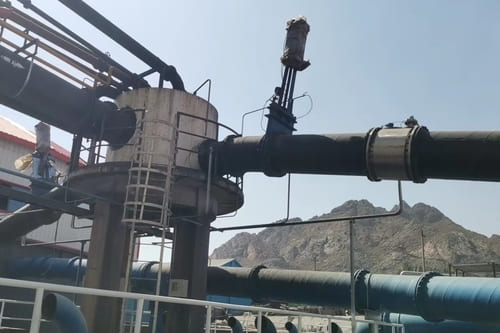
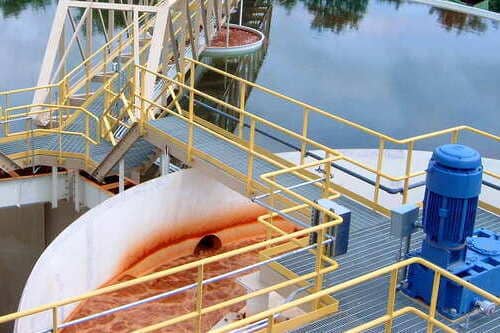
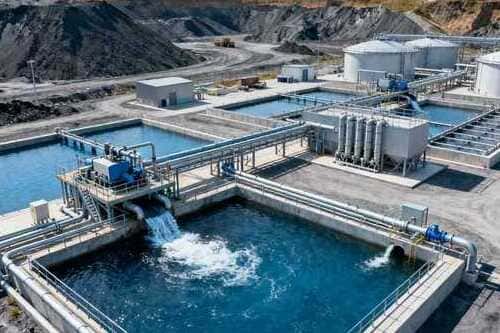
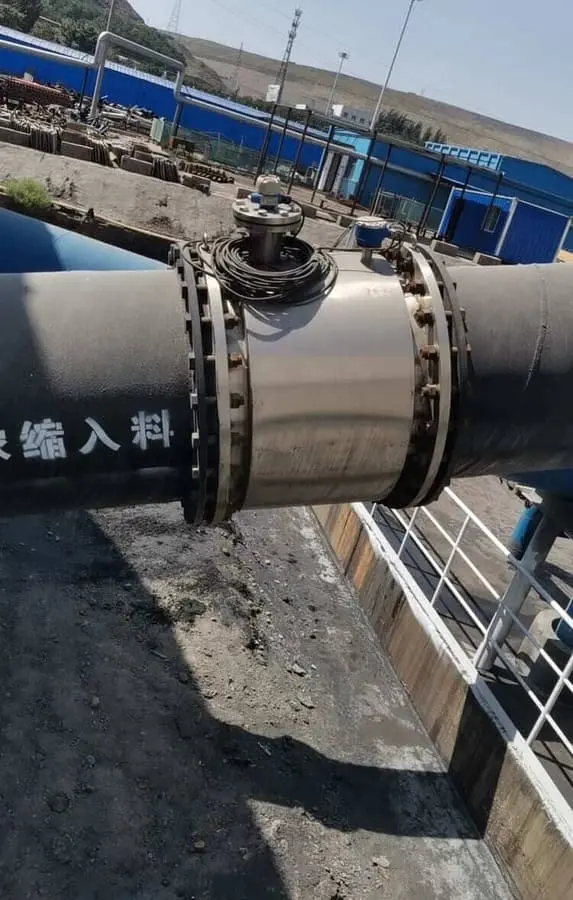
Mining & Mineral Processing Industry Solutions

From grinding circuit slurry and leaching acids to tailings disposal, water injection, and reagent dosing — HBYB instruments are engineered for the wear rates, corrosive media, and remote site conditions that define mineral processing measurement.
Discuss Your Application
Industry Segments We Support

Covering the Mining & Mineral Processing

Each segment produces distinctly different fluid measurement challenges — from high-abrasion ore slurries in extraction to high-purity reagent dosing in hydrometallurgy and corrosive effluent in environmental management.

Metal Ore Mining & Concentrating

Iron, copper, gold, zinc, nickel, and lead ore crushing, grinding, flotation, and gravity concentration circuits — dominated by high-solids slurry measurement at every stage.
Grinding circuit slurry
Flotation feed & froth
Concentrate dewatering
Thickener underflow

Hydrometallurgy & Leaching

Heap leach, agitated leach, and solvent extraction/electrowinning operations for copper, gold, uranium, and nickel — requiring corrosion-resistant measurement for acids, cyanide, and alkaline solutions.
Sulfuric acid leach circuits
raffinate
Cyanide gold leaching
barren solution

Coal & Non-Metallic Minerals

Coal preparation, phosphate beneficiation, potash extraction, limestone processing, and kaolin washing — requiring slurry measurement tolerant of coal fines, silica, and high-conductivity brines.
Coal slurry & wash water
Potash brine
Phosphate slurry
Limestone milk

Tailings Management & Dewatering

Tailings thickener feed and underflow, paste tailings, filtered tailings, and dry stack operations — covering the full spectrum from dilute tailings slurry to high-density paste disposal.
Thickener underflow
Tailings pipeline
Return water
Paste tailings

Water Supply & Treatment

Mine site water supply, process water circuits, acid mine drainage treatment, effluent management, and water recycling — covering both raw water intake and treated discharge compliance measurement.
Process water circuits
AMD treatment
Seepage monitoring

Reagent & Chemical Systems

Flotation reagent dosing, pH control lime addition, flocculant preparation and dosing, cyanide and acid distribution — precision low-flow measurement at process-critical injection points across the plant.
Reagent dosing
Lime slurry addition
Flocculant dosing
What Flow Measurement Covers

Each Requiring a Fundamentally Different flowmeter

Mining and mineral processing plants run three fluid categories with almost nothing in common. Misidentifying which category your fluid belongs to is the most common and most expensive meter selection error in the industry.
Slurry is not a difficult fluid — it is a different fluid category

Ore slurry, tailings, and concentrate lines require specific wetted materials and electrode types that standard industrial meters cannot provide. Getting this wrong means calibration drift within months, not years.

Measurement Challenges

Six Conditions That Drive Instrument Selection in Mining & Mineral Processing

Each represents a real operating failure mode — not an engineering abstraction.

Abrasion destroys standard meters within months

Ore slurry contains silica, quartz, and mineral particles at hardness levels of 6–7 Mohs — sufficient to erode soft rubber linings and standard electrodes in a single processing season. Slurry-grade EM meters use polyurethane or hard rubber linings with tungsten carbide coated or ceramic electrodes specifically rated for high-velocity abrasive slurry. Standard water meters — even with polyurethane linings — are not rated for this service and will fail silently as erosion shifts calibration.
If overlooked: Liner erosion causes a measurable but unadvertised shift in calibration — the meter continues to output a signal while reading 10–20% incorrectly. The error is only discovered at the next physical inspection.

Electrode coating from mineral precipitation

Hard water processing circuits and alkaline leach solutions deposit calcium carbonate, silica, and metal hydroxides on electrode surfaces over time, increasing contact resistance and reducing signal amplitude until measurement fails. Hardened or non-polarizable electrode materials (Hastelloy C, titanium, platinum-iridium) resist coating adhesion. For particularly severe scaling circuits, scraper-type electromagnetic meters — with a mechanical cleaning mechanism built into the sensor body — maintain electrode cleanliness continuously without process shutdown.
If overlooked: Electrode coating causes output signal decay over weeks — a gradual reduction in indicated flow that operators may attribute to process changes rather than instrument fouling, until measurement reaches zero.

Chemical compatibility across the full pH range

Sulfuric acid leach circuits operate at pH 1–2; cyanide circuits at pH 10–11; flotation circuits at pH 7–9; acid mine drainage at variable pH below 4. The correct lining and electrode material differs for each: PTFE/PFA for strong acids, titanium electrodes for cyanide service, polyurethane for neutral slurries. There is no single material combination that covers all of these — selection requires matching the exact chemistry, not a general corrosion-resistant specification.
If overlooked: Incorrect lining chemistry leads to swelling, delamination, or chemical attack within months — requiring emergency meter replacement at production shutdown during active operations.

Remote and off-grid locations demand independent power

Mine sites in Latin America, Africa, and Southeast Asia routinely operate instruments at tailings pipelines, heap leach pads, and water supply points that are kilometres from the processing plant with no mains power. Battery-powered electromagnetic flowmeters with GPRS data transmission and 3.6V lithium battery power cover these positions without a grid connection, transformer, or cable run — enabling real-time monitoring at every point in the plant regardless of infrastructure.
If overlooked: Remote measurement points are left unmonitored, relying on operator walk-around readings at fixed intervals — a sampling frequency too low to detect leaks, blockages, or process deviations before they become costly.

Large-diameter infrastructure makes full-bore meters cost-prohibitive

Tailings discharge lines, water supply mains, and grinding mill circuit headers often run at DN400–DN1000. Full-bore flanged meters at these sizes require pipe cutting, heavy structural support, and a significant capital cost per installation point. Insertion electromagnetic flowmeters — installed through a single hot-tap fitting — provide full-bore equivalent measurement on large-diameter lines at a fraction of the installed cost, while preserving the ability to remove and service the probe under pressure without process shutdown.
If overlooked: Large-diameter lines go unmetered because full-bore installation cost cannot be justified — leaving the largest flow volumes in the plant with no measurement and no loss detection.

Open channel and partially-filled pipe drainage

Mine drainage, site surface runoff, acid mine drainage channels, and tailings pond discharge often flow in open channels or partially-filled pipes — conditions where standard pressurized-pipe meters cannot be installed. Open channel electromagnetic flowmeters and ultrasonic open channel meters measure these flows for environmental compliance reporting without any pipe modification, providing the legally required discharge records for environmental permits and water use licenses.
If overlooked: Unmetered drainage and discharge creates regulatory compliance exposure — environmental permit violations triggered by inability to document flow volumes when required by regulators.

Fluid Measurement Coverage Map

Where Measurement Occurs Across the Mineral Processing Circuit

rom ore feed through to tailings disposal and effluent management — this map shows which fluid streams require measurement at each stage and which meter families apply.
Stage 01
Comminution & Grinding
Ore slurry feed
Grinding water
Mill discharge
Slurry EM (ore pulp)
Integrated EM (water)
Stage 02
Flotation & Classification
Flotation feed/froth
Cell air injection
Reagent dosing
Slurry EM (concentrate)
Thermal Mass (air)
Threaded EM (reagents)
Stage 03
Leaching & Hydromet
Sulfuric acid / cyanide
PLS / barren solution
SX-EW raffinate
EM PTFE/Hastelloy (acid)
Coriolis (specialty)
Stage 04
Thickening & Dewatering
Thickener underflow
Flocculant dosing
Overflow return
Slurry EM (underflow)
Coriolis (flocculant)
Integrated EM (overflow)
Stage 05
Tailings & Effluent
Tailings paste / slurry
AMD treatment
Discharge & drainage
Slurry EM (tailings)
EM PTFE (AMD)
Open Channel (drain)
Electromagnetic (Slurry & Integrated) Flowmeter
Thermal Mass & Vortex Flowmeter
Coriolis Mass Flowmeter
Open Channel / Ultrasonic Flowmeter
Insertion & Battery-Powered EM Flowmeter

Application-to-Instrument Guide

Find the Right Flowmeter for Your Process

Select the fluid category that matches your measurement point. Each card identifies the measurement challenge, explains the instrument selection rationale, and links to the product specification page.
01 - Grinding circuit & mill discharge

Ore pulp flow measurement at ball mill, SAG mill, and rod mill discharge

Grinding circuit slurry carries hard silica and ore particles at velocities that rapidly erode standard linings. Slurry-grade electromagnetic meters with polyurethane or hard rubber lining and tungsten carbide coated electrodes are the industry standard — the full-bore, zero-obstruction design generates no pressure drop that would affect mill circuit hydraulics, and the wear-resistant construction holds calibration through full grinding campaigns between liner changes.
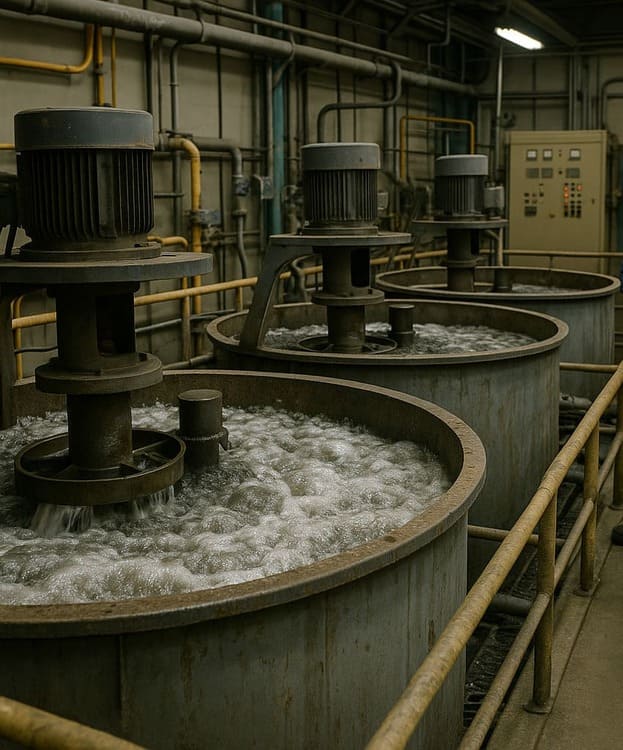

Best fit: Ball mill / SAG mill discharge, cyclone feed, high-velocity ore slurry with ≤70% solids by weight.
Polyurethane / rubber lining
Hard-face electrodes
Zero pressure drop
Up to 70% solids
Slurry-Type Magnetic Flowmeter →
02 - Flotation concentrate & froth

Concentrate slurry measurement at flotation circuit outlet and concentrate thickener feed

Flotation concentrate slurries are fine-grained, moderately abrasive, and often carry reagent residuals that eliminate turbine and differential pressure meters. Slurry electromagnetic meters with PTFE or polyurethane lining — selected based on reagent chemistry — handle these streams with the accuracy required for concentrate grade accounting and metallurgical balance calculations. The zero-obstruction bore also prevents the froth and air entrainment common near flotation cells from disrupting the measurement signal.

Best fit: Copper, zinc, lead, nickel, or molybdenum concentrate slurry lines. Also suitable for rougher, scavenger, and cleaner circuit mass flow balance.
PTFE or polyurethane lining
Froth-tolerant full bore
Reagent compatible
Slurry-Type Magnetic Flowmeter →
03 - Coal preparation & washing circuits

Coal slurry measurement in dense medium circuits, centrifuge feed, and froth flotation feed

Coal slurry carries fine coal particles in water at solids concentrations of 20–50% by weight — conductive and abrasive, but less corrosive than ore leach slurries. Electromagnetic meters with hard rubber lining and stainless electrodes are the correct choice, balancing abrasion resistance with cost-effectiveness for the lower aggressiveness of coal fines compared to metal ore minerals. In coal preparation plants where explosion-proof certification is required, ExdIICT6-rated versions are available as standard.

Best fit: Coal preparation dense medium, flotation feed, dewatering screen underflow. Rubber lining preferred for coal applications.
Hard rubber lining
Explosion-proof available
20–50% coal solids
316L electrodes standard
Slurry-Type Magnetic Flowmeter →
04 - Severe scaling & electrode fouling service

High-scaling slurry circuits where calcium carbonate or silica deposits coat electrodes continuously

In hard water processing circuits — phosphate beneficiation, limestone-neutralized AMD, or alkaline leach circuits — carbonate and silica scale deposits on electrode surfaces within days, driving measurement toward zero. The scraper-type electromagnetic flowmeter resolves this with an integrated mechanical wiper that continuously cleans electrode surfaces without stopping production, maintaining calibration across long operating campaigns where standard meters require weekly cleaning shutdowns.

Best fit: Phosphate slurry, limestone milk, alkaline process circuits prone to carbonate scaling. Eliminates maintenance shutdowns for electrode cleaning.
Self-cleaning electrode wiper
No cleaning shutdown
Scaling-resistant design
Phosphate & limestone service
Scraper-Type Magnetic Flowmeter →
01 - Acid leach circuits

Sulfuric acid flow measurement in heap leach irrigation and agitated leach feed

Sulfuric acid at concentrations of 5–30 g/L (pH 1–2) attacks 316L SS and polyurethane lining within months. Electromagnetic meters with PTFE or PFA lining and Hastelloy C or titanium electrodes provide the chemical resistance required for sustained acid service without calibration drift from liner degradation. The choice between PTFE and PFA lining depends on operating temperature and whether negative pressure conditions exist in the circuit — Hastelloy C electrodes are preferred for oxidizing acid environments.

Best fit: Sulfuric acid leach solution, PLS (pregnant leach solution), raffinate return. PTFE lining + Hastelloy C electrodes as standard selection.
PTFE / PFA lining
Hastelloy C electrodes
pH 0–14 chemical range
Copper / uranium leaching
Integrated Magnetic Flowmeter →
02 - Cyanide & alkaline gold leach circuits

Cyanide solution measurement in carbon-in-leach (CIL), carbon-in-pulp (CIP), and heap leach gold circuits

Cyanide solution in gold processing circuits operates at pH 10–11 and presents a specific corrosion profile — titanium and platinum-iridium electrodes are preferred over Hastelloy for this chemistry. The circuit also carries fine gold ore particles at low concentrations, making polyurethane or PTFE lining the correct choice. Personnel safety requirements for cyanide handling demand that wetted materials are certified compatible before installation — HBYB provides full material compatibility documentation as standard for cyanide service inquiries.

Best fit: CIL / CIP leach circuit solution, cyanide barren solution, elution circuit. Titanium electrodes + PTFE lining.
Titanium electrodes
PTFE lining
Material cert provided
Alkaline pH 10–11 service
Integrated Magnetic Flowmeter (Titanium) →
03 - Flotation reagent & collector dosing

Precision dosing of xanthate collectors, frothers, activators, and pH modifiers to flotation cells

Flotation reagent dosing directly determines mineral recovery and concentrate grade — under-dosing drops recovery, over-dosing wastes reagent and depresses selectivity. Flow rates are low (liters to tens of liters per hour), and the reagents include xanthates, dithiophosphates, and amines that are corrosive to some electrode materials. Small-bore threaded electromagnetic meters cover these low-flow conductive reagent streams precisely. For non-conductive collector reagents (some specialty oils), Coriolis meters provide the alternative at these small flow rates.

Best fit: Conductive flotation reagent supply lines (collectors, frothers, modifiers). DN15–DN50 bore, low flow rate service.
DN15–DN50
Low-flow precision dosing
Reagent-compatible lining
Batch or continuous
Threaded Magnetic Flowmeter →
03 - High-value & non-conductive reagent dosing

Mass-based dosing of flocculants, specialty reagents, and non-conductive chemical solutions where electromagnetic meters are inapplicable

Polyacrylamide flocculants, some specialty extraction reagents, and organic process chemicals have low or zero conductivity — eliminating electromagnetic meters entirely. For these fluids, Coriolis mass meters measure directly by mass regardless of conductivity, viscosity, or density, making them the correct solution for precision dosing of high-value or non-conductive process chemicals. The direct mass output also eliminates the need for separate density measurement to calculate mass dose from volume flow.

Best fit: Non-conductive reagents, viscous flocculants, specialty organic chemicals where EM meters cannot operate. Dosing accuracy directly tied to product quality.
Non-conductive fluids
Direct mass output
Viscosity independent
DN6–DN150
Coriolis Mass Flowmeter →
01 - Grinding & process water supply

Water addition to grinding mills, cyclone dilution, and process circuit water distribution

Process water in the grinding circuit controls slurry density and viscosity — the primary variables governing grinding efficiency and downstream flotation performance. Accurate water addition measurement at each mill inlet and at dilution points enables tight pulp density control. Standard integrated electromagnetic flowmeters with neoprene or PTFE lining serve this clean water duty reliably, and the full-bore design produces no pressure drop that would affect circuit hydraulics across the distribution network.

Best fit: Fresh and reclaim water addition to grinding circuits, cyclone dilution water, classification circuit water. DN25–DN500 standard range.
±0.5% accuracy
Pulp density control
Neoprene / PTFE lining
316L electrodes standard
Integrated Magnetic Flowmeter →
02 - Thickener overflow & reclaim water return

Thickener overflow, tailings pond return water, and process water recycle to plant

Thickener overflow and return water from the tailings pond carry fine suspended solids and residual reagents — conductive, mildly corrosive, and at moderate solids content. Integrated electromagnetic meters handle this duty accurately. For large-diameter reclaim water return lines where full-bore flanged meter installation cost is prohibitive, insertion electromagnetic meters provide equivalent measurement accuracy through a single hot-tap installation point without requiring pipe cutting or line shutdown.

Best fit: Thickener overflow DN50–DN500 (integrated EM). Return water mains DN300–DN1000 (insertion EM) for large-pipe cost efficiency.
Mildly conductive process water
Insertion option for large DN
No pipe shutdown required
Hot-tap installation
Insertion Magnetic Flowmeter →
03 - Site water supply & distribution

Mine site fresh water intake, dam draw-off, and plant water distribution to multiple process areas

Mine site water supply infrastructure often involves large-diameter mains (DN300–DN1200) supplying water from dams, rivers, or boreholes. For existing supply lines where shutdown is not permitted, clamp-on ultrasonic meters mount on the outside of the existing pipe without cutting or tapping — providing immediate flow measurement for water balance calculations and reporting to regulators without capital expenditure on pipe modifications.

Best fit: Existing large-diameter site water supply mains. New installations DN100+ (integrated EM). Retrofit on existing pipes without shutdown (clamp-on ultrasonic).
Zero pipe modification
No process shutdown
Water balance compliance
Portable or permanent
Clamp-On Ultrasonic Flowmeter →
03 - Remote wellfield & bore supply

Water bore production metering and wellfield flow monitoring at remote locations without mains power

Mine site water bores and remote transfer points typically lack mains power and require instruments that operate independently for 12–24 months between service visits. Battery-powered electromagnetic flowmeters with 3.6V lithium battery supply and GPRS data transmission provide continuous remote monitoring without power infrastructure — outputting daily totals and real-time flow data to the site SCADA system via cellular network from any location with signal coverage.

Best fit: Remote water bore monitoring, off-grid transfer pump metering, wellfield management. Battery life 3–5 years standard.
Battery-powered — no mains
GPRS data transmission
3–5 year battery life
IP68 submersion rated
Battery-Powered Magnetic Flowmeter →
01 - Flotation air injection

Compressed air or blower air flow measurement to flotation cell spargers and aerators

Flotation air flow rate to each cell bank directly controls bubble size, air dispersion, and ultimately mineral recovery and froth stability. Under-aeration reduces recovery; over-aeration creates froth overflow and reagent waste. Inline thermal mass flowmeters on each air supply branch deliver direct Nm³/h output without additional pressure or temperature transmitters — providing the per-cell air measurement required for flotation circuit optimization and automated air flow control.

Best fit: Flotation cell air supply (individual cells or cell banks), sparger air, mechanical cell aeration. DN25–DN200 branch line sizes.
Direct Nm³/h output
No T/P compensation needed
Per-cell flow control
DN25–DN200
Inline Thermal Mass Flowmeter →
02 - Compressed air utilities & instrument air

Plant compressed air mains measurement for energy monitoring and leak detection

Compressed air in mineral processing plants is consumed by pneumatic controls, pumps, conveyors, drills, and instrumentation — and typical mine site compressed air networks leak 20–40% of generated flow. Insertion thermal mass meters on main air headers identify consumption by zone, locate leak locations, and enable energy cost allocation to each process area — all without cutting the existing pipe through hot-tap installation.

Best fit: Plant compressed air mains (DN150–DN600), instrument air headers, pneumatic distribution systems. Hot-tap insertion — no pipe shutdown.
Hot-tap insertion
Leak detection capability
Energy cost allocation
Insertion Thermal Mass Flowmeter →
03 - Kiln & dryer combustion gas

Fuel gas supply metering to rotary kilns, flash dryers, and process burners in pyrometallurgical operations

Rotary kilns for calcining, flash dryers for concentrate drying, and roasters in gold and copper pyrometallurgy require accurate fuel gas control for temperature stability and energy efficiency. Gas turbine meters with integrated temperature and pressure compensation deliver standard volume output (Nm³/h) for direct combustion control and energy reporting — in a single instrument without a separate flow computer.

Best fit: Natural gas, LPG, or producer gas supply to kilns, dryers, and process burners. Dry fuel gas service, DN25–DN200.
Integrated T&P compensation
Direct Nm³/h output
±0.5% Class 5
Up to 6.3 MPa
Gas Turbine Flowmeter →
04 - Process steam for autoclave & HPOX

High-pressure steam supply to pressure oxidation autoclaves and HPOX circuits in refractory gold and nickel laterite processing

Pressure oxidation autoclaves operate at 190–230°C and up to 4 MPa — conditions that require steam measurement with no moving parts and no impulse lines that could block with mineral scale. Multivariable vortex meters with integrated temperature and pressure sensing measure steam mass flow directly, providing the energy monitoring and flow control data needed for autoclave temperature regulation and oxygen injection control.

Best fit: POX autoclave steam supply, HPOX flash steam measurement, dryer steam circuits. Up to 350°C, no moving parts.
Up to 350°C service
No moving parts
Integrated T&P compensation
Mass flow output
Multivariable Vortex Flowmeter →
01 - Tailings pipeline & thickener underflow

Tailings slurry flow measurement from thickener underflow to tailings storage facility

Tailings slurry from thickeners carries fine mineral particles at 40–65% solids by weight and is transported by centrifugal pump to the tailings storage facility (TSF). The slurry is abrasive but less aggressive than grinding circuit slurry — polyurethane-lined electromagnetic meters are the standard selection. For high-density paste tailings at 65–75% solids, slurry-grade meters with harder linings and robust electrode designs handle the increased wear rate of paste service without calibration loss.

Best fit: Thickener underflow (40–65% solids), paste tailings lines (65–75% solids), tailings pipeline distribution. Polyurethane lining standard.
40–75% solids service
Polyurethane lining
Paste & slurry both covered
TSF pipeline sizing
Slurry-Type Magnetic Flowmeter →
02 - Acid mine drainage (AMD) treatment & discharge

AMD collection, treatment plant flow measurement, and treated effluent discharge monitoring

Acid mine drainage from waste rock and tailings facilities carries dissolved metals and low pH — a highly corrosive fluid that attacks standard meter linings within months. Electromagnetic meters with PTFE or rubber lining and Hastelloy or titanium electrodes handle AMD chemistry across the full pH range from below 2 to neutralized discharge at pH 7–9. Discharge measurement for environmental compliance requires continuous totalization, which standard integrated EM meters provide as a standard feature.

Best fit: AMD collection sumps, neutralization circuit, treated discharge to receiving water. PTFE lining + Hastelloy C electrodes for low-pH AMD.
pH 1–9 range
Compliance reporting
PTFE + Hastelloy C
Continuous totalization
Integrated Magnetic Flowmeter →
03 - Open channel drainage & environmental discharge

Open channel mine drainage, TSF seepage pond discharge, and stormwater runoff flow measurement for environmental compliance

Mine drainage, seepage collection, and stormwater runoff flow through open channels or partially filled pipes — conditions where pressurized-pipe meters cannot be installed. Open channel electromagnetic flowmeters and ultrasonic open channel meters measure these flows for environmental permit compliance without any pipe modification. The documented flow totals these meters provide are the legal record required to demonstrate compliance with discharge license conditions and watershed protection agreements.

Best fit: Open drainage channels, seepage ponds, stormwater ditches. No pipe modification required. Legal compliance documentation output standard.
Open channel — no pipe
Environmental permit compliance
Continuous totalization
No installation shutdown
Magnetic Open Channel Flowmeter →
04 - Large-diameter tailings & return water mains

Flow monitoring on large-diameter tailings return water headers and process water recycle mains

Large tailings return water mains (DN400–DN1200) and process water recycle headers are typically not metered because full-bore flanged meter installation at these sizes is expensive and requires extended pipe shutdown. Insertion electromagnetic meters installed through a hot-tap fitting solve both problems — they measure with accuracy equivalent to a full-bore meter, install under pressure, and cost a fraction of a flanged meter of equivalent size.

Best fit: Existing large-diameter water return mains (DN300–DN3000). Hot-tap — no process shutdown. Fraction of full-bore flanged meter cost.
DN100–DN3000 coverage
Hot-tap — no pipe cutting
Live installation
Low installed cost
Insertion Magnetic Flowmeter →

Application Reference

Slurry Measurement & Reagent Dosing at a Copper Flotation Plant

The Challenge

A copper concentrator was experiencing metallurgical recovery variability that could not be traced to ore grade changes. The flotation circuit had no individual cell air flow measurement, and xanthate collector dosing relied on pump stroke counting without independent verification. Standard water service electromagnetic meters installed on the grinding circuit discharge had experienced premature liner erosion within eight months of installation.

The Solution

HBYB slurry-type electromagnetic flowmeters with polyurethane lining and tungsten carbide coated electrodes replaced the water-service meters on grinding circuit discharge lines. Inline thermal mass flowmeters were installed on each flotation cell air branch. Threaded electromagnetic meters (DN20, PTFE lining, titanium electrodes) were installed on xanthate collector and frother supply lines to provide independent dosing verification.

The Outcome

Slurry meter calibration held through a full twelve-month operating campaign without intervention. Air flow measurement revealed a 35% imbalance between cell banks in one flotation circuit — corrected by adjusting air valve positions. Collector dosing verification identified a pump delivering 22% below setpoint, traced to a worn diaphragm. Following corrections, flotation recovery improved measurably across the affected circuit.

12 mo

Slurry meter calibration held

35%

Air imbalance identified

WC

Tungsten carbide electrodes

PU

Polyurethane slurry lining

Material & Service Standards

Built for the Abrasion, Corrosion, and Remote Conditions of Mining

The specifications that mining procurement and metallurgical engineers look for — available as standard, not special order.

Wear-Resistant Lining Options

Polyurethane, hard rubber, PTFE, PFA, and ceramic lining options cover the full range of mining fluid abrasion and chemical profiles — from high-velocity ore slurry to strong acid leach solutions.

Hardened Electrode Materials

Tungsten carbide coated SS, Hastelloy B/C, titanium, tantalum, and platinum-iridium electrode options provide long-term corrosion and erosion resistance across acid, cyanide, and abrasive slurry services.

Battery & GPRS Remote Operation

3.6V lithium battery power with 3–5 year life and GPRS cellular data transmission enable fully independent operation at remote mine site positions without mains power or cable infrastructure.

Explosion-Proof Certification

ExdIICT6 Gb and ExiaIICT4 explosion-proof certifications are available across the electromagnetic and thermal mass product range for coal preparation and underground mining hazardous area installations.

Request application support

Tell Us Your Fluid and Process Conditions. We'll Specify the Right Instrument.

Whether you're specifying a slurry meter for a grinding circuit, an acid-resistant meter for a leach circuit, a remote battery-powered installation, or an open channel meter for environmental discharge — describe your fluid, solids content, pH, and pipe size. We return a complete instrument specification with lining and electrode recommendations within 24 hours.
Technical specialist response within 24 hours
Direct manufacturer pricing — no distributor margin