
Chemical & Petrochemical Industry Solutions
Flow Measurement Built for Every Process Fluid in Chemical Production
From corrosive acids and hydrocarbon liquids to process gases, slurries, and high-pressure steam — HBYB instruments are specified for the material demands, safety classifications, and measurement accuracy that chemical and petrochemical processes require.
Discuss Your ApplicationIndustry Scope
Three Distinct Fluid Systems in Every Chemical
A chemical plant operates three fundamentally different types of fluid system simultaneously — each with different media properties, safety classifications, and measurement priorities. No single meter technology covers all of them.
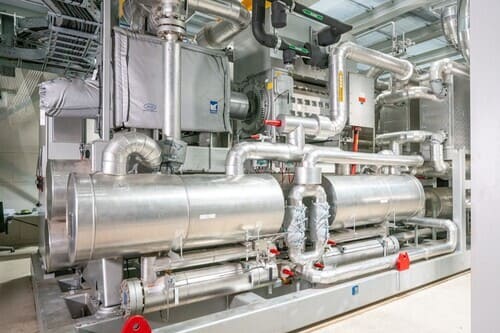
Process & Reaction Fluids
The chemicals that are transformed, transferred, and measured as part of the production process — from feedstocks to intermediates to finished products. Material compatibility and accuracy are the primary selection drivers.
Acids & alkalis
Petroleum products
Organic solvents
Process gases
Catalyst slurries
Polymer solutions
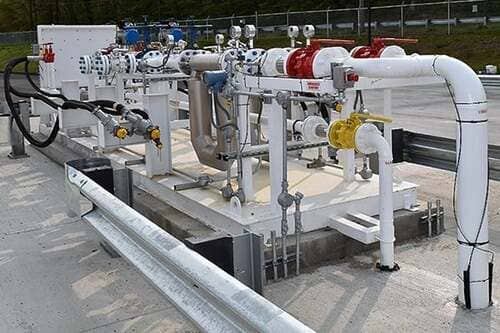
Utilities & Thermal Systems
The fluids that provide energy, cooling, and infrastructure for the production process. Efficiency monitoring and energy cost attribution are the primary measurement drivers at this level.
Process water
Steam
Compressed air
CO₂ dosing
N₂ blanketing
Cooling water
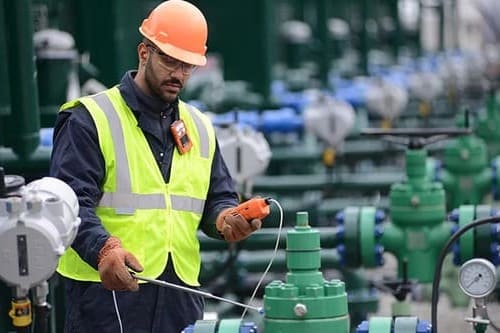
Safety & Environmental
Fluids that must be measured to protect people, assets, and the environment. Regulatory compliance and continuous monitoring are mandatory — not optional — in modern chemical facility operation.
CIP supply & return
SIP steam
Caustic & acid circuits
Wastewater
Exhaust gas
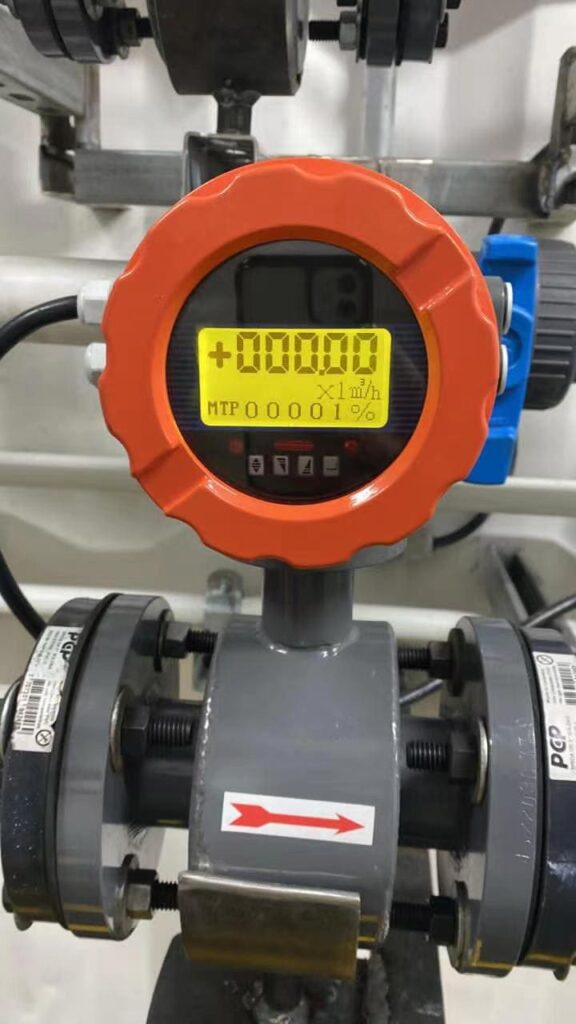
The cost of an incorrect specification
In chemical service, a wrong material selection or missing explosion-proof rating isn't a calibration issue — it's a safety event or a process shutdown.
Measurement Challenges
Six Conditions That Define Instrument Selection in Chemical & Petrochemical
Each of these has a direct operational consequence when overlooked. This is not abstract engineering — it is the reason chemical plants specify instruments differently from any other industry.
Material compatibility — the first and non-negotiable selection gate
Sulfuric acid attacks standard 316L stainless steel electrodes. Hydrochloric acid vapors corrode instrument electronics. Nitric acid destroys materials that withstand HCl. No other industry demands such precise attention to the interaction between the process fluid and every wetted surface of the instrument. Wrong material = instrument failure within weeks, not years.
If overlooked: An electromagnetic meter with the wrong electrode material installed in HCl service will show erratic readings within days and fail completely within weeks — requiring emergency shutdown for replacement.
Explosion-proof classification — mandatory, not optional
Chemical plants classify process areas into hazardous zones (Zone 0, 1, 2 under IECEx/ATEX) based on the probability of flammable atmosphere presence. Every instrument in a Zone 1 or Zone 2 area must carry the correct explosion-proof certification — ExiaIICT4 for the highest hazard group (hydrogen, acetylene), ExIIBT4 for standard hydrocarbon/solvent environments. A non-certified instrument in a hazardous area is both illegal and genuinely dangerous.
If overlooked: Uncertified instruments in hazardous areas create ignition risks and constitute a legal compliance failure — triggering immediate shutdown by safety authorities if identified during inspection.
Custody transfer accuracy — the financial precision requirement
When petroleum products, LPG, or specialty chemicals change ownership at a transfer point, measurement error translates directly into financial loss. A 0.3% error on 10,000 tonnes per month of crude oil transfer represents significant commercial exposure over a year. Custody transfer metering requires not just an accurate meter, but documented calibration traceability, defined uncertainty, and a metering protocol that both parties accept.
If overlooked: Commercial disputes over product quantity at custody transfer points — with no instrument-based resolution available when measurement uncertainty exceeds contractual tolerance.
Viscosity variability — the condition that disqualifies most common meters
Polymer solutions, heavy crude, resins, and adhesives can range from 10 cP to 100,000 cP depending on temperature and shear. Turbine meters lose accuracy above approximately 20 cP. Vortex meters cease to function below a minimum Reynolds number that viscous fluids reach quickly. Electromagnetic meters remain viscosity-immune for conductive media. Coriolis meters measure by mass regardless of viscosity — the only meter type with no theoretical viscosity limitation.
If overlooked: A turbine meter installed on a polymer feed line under-reads systematically as temperature drops and viscosity rises — producing batching errors that are invisible until product quality failures are detected.
High temperature and pressure — the operating envelope of process streams
Cracking furnace outlets operate above 400°C. High-pressure steam to reactors runs at 3–4 MPa. Distillation column reflux is at or above boiling point. Standard flanged meters are rated to 4.0 MPa; high-pressure versions reach 42 MPa for specialized chemical service. Temperature-induced phase changes — particularly in LPG and solvent lines near their boiling points — create partial vapor conditions that invalidate single-phase flow meter readings.
If overlooked: A meter installed below the bubble point of a light hydrocarbon stream reads incorrectly as vapor forms within the sensor body — with no alarm or indication that the reading has become invalid.
Environmental & emissions compliance — regulatory measurement requirement
Flare gas continuous emission monitoring is mandatory under environmental permit conditions across most jurisdictions. Wastewater effluent volume must be metered for discharge permit compliance. Vent gas from safety relief systems must be accounted for. These measurements are not optional process-optimization additions — they are regulatory obligations where measurement failure constitutes a permit violation regardless of actual emission levels.
If overlooked: Failure to provide continuous, documented flare gas measurement triggers environmental permit violations — with potential for facility operating license suspension pending corrective action.
SELECTION GUIDE
How to Narrow the Right Meter Without Overcomplicating the Decision
Start with your fluid phase — then follow the key condition to the recommended technology. Full application details are in the tabbed section below.
- Your fluid is a liquid
Conductive liquid (water-based, acids, alkalis, brines)
Key: Match lining and electrode to the specific chemical
Clean non-conductive liquid, viscosity < 20 cSt
Petroleum products, solvents, light oils — Ex-proof required
Non-conductive, viscous, or custody-transfer critical
Heavy crude, polymers, resins, LPG liquid, high-value batch dosing
Toxic, hazardous to handle, or large-bore retrofit
Aromatics, chlorinated solvents, DN300+ piping, no-shutdown install
Conductive slurry or abrasive suspension
Catalyst slurry, mineral suspension, scaling or fouling fluids
- Your fluid is a gas, vapor, or steam
Natural gas, LPG, process gas under pressure
Custody transfer, boiler fuel, cracking furnace feed metering
Gas Turbine Flowmeter
LPG, ethylene, propylene vapor under pressure in Ex areas
Vibration-prone compressor/pump areas, IIC hazard zones
High-pressure steam
Up to 350°C — no moving parts, no impulse lines
Hydrogen, nitrogen, inert gas, or variable-flow gas
Direct mass output, no T/P compensation required
Flare gas, vent gas, exhaust on large-bore headers
Wide turndown, 0.5–100 Nm/s, insertion probe, no full-bore cut
Application-to-Instrument Guide
Find the Right Flowmeter for Your Process
Select the process fluid category that matches your application. Each card describes the specific scenario, explains the key measurement challenge, and identifies the precise instrument recommendation — with a direct link to the product page.
01 - MINERAL ACIDS
Material recommendation: Tantalum electrodes for H₂SO₄ at all concentrations below 150°C. Hastelloy B for dilute reducing acid service. PTFE or F46 lining — not rubber, which degrades in concentrated H₂SO₄.
PTFE / F46 liner
Tantalum electrodes
Remote converter option
02 - MINERAL ACIDS
Critical selection: : Hastelloy B resists all HCl concentrations below boiling point. Avoid Hastelloy C in reducing acid service —it's designed for oxidizing environments & corrodes in pure HCl. Split-type design is mandatory to protect the converter from vapor.
Hastelloy B electrodes
PTFE liner mandatory
Remote converter
03 - ALKALI TRANSFER
Temperature threshold: Below 60°C, integrated design is acceptable. Above 60°C or in high-concentration NaOH, split type with Hastelloy C electrodes and PTFE lining is the correct specification.
PTFE / Hard rubber liner
Hastelloy C electrodes
IP67 protection
04 - OXIDIZING ACIDS
Electrode selection is non-negotiable: Tantalum for HNO₃ — it resists all concentrations including boiling. Platinum-iridium alloy for the most aggressive mixed-acid service. Standard electrodes will fail within weeks in oxidizing acid service.
Tantalum / Pt-Ir electrodes
PTFE / PFA liner
DN10–DN200 range
05 - CHLOR-ALKALI
Scaling management: Brine deposits form on protrusions and recesses. Electromagnetic measurement with flush-bore design eliminates all internal protrusions — the bore remains full-diameter and self-clearing with normal flow velocity.
Titanium electrodes
Flush-bore design
High conductivity compatible
06 - AMMONIA
Aqueous vs. anhydrous: Aqueous ammonia → electromagnetic meter. Anhydrous liquid ammonia → Coriolis mass flowmeter (non-conductive; also provides density monitoring for quality verification at transfer points).
Hastelloy B electrodes
PTFE liner
Anhydrous: Coriolis alternative
01 - REFINED PRODUCTS
Best fit: Clean petroleum distillates at kinematic viscosity below 5 cSt. The ±0.5% accuracy and ±0.1% shot-to-shot repeatability make turbine the standard for light petroleum product metering and custody transfer at terminal loading facilities.
±0.5% accuracy
SIL-3 certified
DN15–DN500
02 - MIDDLE DISTILLATES
Custody transfer capable: With a calibrated K-factor and standardized pulse output, the flanged turbine meets the documentation requirements for inter-company petroleum product handover — the basis for commercial measurement at refinery terminals.
Batch totalization
1:20 range ratio
Calibration cert standard
03 - HEAVY PETROLEUM
Why Coriolis here: Turbine meters lose calibration above 20 cSt. Coriolis measurement bypasses the viscosity problem entirely — mass flow is measured by inertia, not by rotor speed. The density reading simultaneously confirms blend quality for API gravity compliance at each transfer.
Viscosity-immune
DN15–DN200
Mass + API gravity output
04 - LPG CUSTODY
For custody transfer: Mass-based Coriolis measurement eliminates the temperature and pressure correction factors that volume-based meters require. At LPG transfer points, a 10°C temperature change can shift volumetric readings by 2–3% — Coriolis is unaffected by this.
Direct mass output
High-pressure rated
Custody-grade ±0.1–0.2%
05 - PIPELINE RETROFIT
Zero-downtime installation: Clamp-on acoustic transducers attach to the pipe outside — suitable for DN50–DN6000. Portable units first verify the measurement case; the same technology scales to permanent fixed installation with the same accuracy in stable flow conditions.
Non-invasive
No shutdown required
DN50–DN6000
06 - THREADED SMALL-BORE
Best fit: DN4–DN50 clean petroleum or chemical injection at up to 25 MPa (DN4–DN10). The compact threaded body integrates directly into existing chemical injection skid piping without flanges or pipe modifications.
DN4–DN50
Up to 25 MPa (DN4–10)
Compact threaded body
01 - ALCOHOLS
Seal material first: Before specifying the meter, confirm seal material compatibility with the specific solvent. PTFE seals are universally compatible with alcohols. Viton provides additional resistance for mixed-solvent streams. NBR or BUNA are incompatible with most organic solvents.
PTFE / Viton seals
SIL-3 certified
±0.5% accuracy
02 - AROMATICS
Safety preference: For benzene and carcinogenic aromatic lines, clamp-on installation removes all maintenance exposure to the chemical. The acoustic transit-time method measures any liquid velocity accurately — compatible with the full BTX viscosity and density range.
Zero wetted parts
No personnel exposure
Safe installation
03 - KETONES & ESTERS
Seal compatibility is the primary failure mode: Standard NBR/BUNA seals dissolve in acetone service within days to weeks. Every turbine meter for ketone or ester service must be specified with PTFE seals as a minimum — confirm this in the order documentation.
PTFE seals mandatory
SIL-3 certified
Low viscosity compatible
04 - SPECIALTY DOSING
Mass + density = single instrument: In high-value chemical batch dosing, a Coriolis meter replaces both the flowmeter and the densitometer — providing both measurements from a single process connection with zero additional pressure taps or maintenance requirements.
Mass + density output
Batch accuracy ±0.1%
05 - HALOGENATED
Containment safety: Clamp-on installation means the meter has no process connection that could fail and release the chemical. For maintenance or replacement, no line isolation is required — eliminating the exposure event that inline meter removal creates in chlorinated solvent service.
Zero contact with fluid
No seals to expose
High SG compatible
06 - CONDUCTIVE ORGANICS
Conductivity check first: Organic acids typically have conductivity of 50–500 μS/cm — well within the electromagnetic meter operating range. Confirm conductivity above 5 μS/cm for any organic stream before selecting electromagnetic measurement as the technology.
PTFE liner
Hastelloy B / Tantalum
5 μS/cm minimum conductivity
01 - FUEL & FEEDSTOCK
Single-instrument standard volume: Integrated T/P compensation outputs Nm³/h directly — eliminating the DP transmitter, temperature input, pressure input, and flow computer that orifice-plate systems require. Net installation cost advantage is significant for multiple metering points.
Integrated T/P compensation
±0.5% Class 5
Direct Nm³/h output
02 - HYDROCARBON VAPOR
Vibration resistance: Chemical plant pipework near compressors transmits mechanical vibration that causes signal noise in sensitive gas meters. Vortex meters with dual-sensor anti-vibration designs suppress pipeline vibration while maintaining accurate shedding frequency detection in the gas.
Anti-vibration design
SIL-3 certified
DN15–DN300
03 - HYDROGEN
No compensation required: Unlike volumetric meters that require T/P correction for accurate hydrogen mass flow, thermal mass measurement responds to the mass of gas molecules directly — providing accurate Nm³/h output regardless of pressure and temperature variation in the hydrogen supply system.
Direct mass flow
SIL-3 certified
Low-density gas
04 - INERT GAS UTILITIES
Leak detection through balance: Installing insertion thermal mass meters on sub-distribution headers creates a consumption balance. When sub-meter totals fall short of the supply header meter, a leak exists between them — identified to the specific sub-circuit without physical search.
Hot-tap installation
Direct mass output
Zone metering capable
05 - FLARE GAS
Why insertion type: Flare headers are typically DN300–DN1000. Full-bore meters in this range are prohibitively expensive. Insertion thermal mass probes deliver calibrated measurement without modifying the full bore of the flare header — and can be hot-tapped into existing headers during continuous operation.
0.5–100 Nm/s range
200:1 turndown
Emissions compliant
06 - COMPRESSED AIR
Leak audit return on investment: A compressed air leak of 3 mm diameter continuously costs approximately 1,000–2,000 kWh per year. A single insertion thermal mass meter identifying one such leak typically delivers a payback in less than 30 days compared to the energy cost of the leak.
No pipe cutting
Direct mass flow
Leak detection capable
01 - CATALYST SLURRIES
Liner material determines service life: Standard PTFE liners crack in abrasive slurry under vibration and wear. Polyurethane rubber for moderate abrasive slurries up to 60°C. High-alumina ceramic (Al₂O₃) lining for highly abrasive catalyst slurries — 10× the wear resistance of polyurethane at the temperature limit of ceramic installation.
Wear-resistant liner
No moving parts
Abrasion-tolerant bore
02 - POLYMERS
Concentration monitoring option: In continuous polymerization, the Coriolis density output tracks polymer concentration in real time — enabling feed ratio control and product quality verification. This replaces offline sampling programs that create time lag in concentration correction loops.
Viscosity-independent
Non-Newtonian compatible
Density output: Coriolis option
03 - RESINS & ADHESIVES
No viscosity limit: Coriolis measurement is based on the mass of fluid oscillating in the measurement tube — not on flow velocity or fluid dynamics. A resin at 50,000 cP measures exactly as accurately as a Newtonian liquid at 1 cP, provided the pump provides sufficient driving pressure.
Viscosity-immune measurement
Mass + density
DN4–DN200
04 -HEAVY CRUDE & BITUMEN
Heated Coriolis for bitumen: At bitumen transfer temperatures of 140–160°C, Coriolis meters measure accurately with no viscosity limitation. The density reading confirms blend quality for API gravity compliance simultaneously — a single instrument delivering two custody measurements at one process connection.
High-temperature
API gravity monitoring
Heated process body option
05 - SCALING FLUIDS
Self-cleaning design: The built-in scraper mechanism operates during normal flow — removing scale continuously without production interruption. This feature is unique to the scraper-type electromagnetic meter and is not available in any other flow measurement principle. Ideal for supersaturated brine, phosphate slurry, and crystallizing salt streams.
Built-in scraper mechanism
Continuous self-cleaning
Scale & fouling tolerant
06 - WASTEWATER SLURRY
Full pipe vs. open channel: Pressurized effluent under full-pipe conditions → integrated or insertion electromagnetic meter. Gravity-flow partially-filled drainage channels → partially-filled electromagnetic meter. The flow regime determines which instrument type applies — confirm pipe full condition before specifying a full-bore meter.
Chemical-resistant lining
Solids-tolerant bore
Open channel option available
01 - HIGH-PRESSURE STEAM
Versus DP metering: Orifice plate systems in high-pressure steam service require impulse lines, isolation valves, and regular blowdown maintenance. Vortex meters install inline with a single process connection and no ancillary piping — significantly reducing both initial installation cost and ongoing maintenance burden.
02 - STEAM DISTRIBUTION
BSteam audit enabler: Without individual branch meters, steam losses from failed traps and piping leaks are invisible in energy accounts. Branch vortex metering identifies the specific distribution losses that typically represent 10–25% of total boiler generation cost in uninstrumented chemical plants.
03 - COOLING WATER
Heat exchanger fouling detection: An electromagnetic meter on cooling water supply, combined with T/P sensors on inlet and outlet, enables real-time heat transfer coefficient calculation. A declining coefficient at constant flow rate indicates fouling — detectable weeks before it causes a process temperature excursion.
Zero pressure drop
No fouling
insertion option for DN300+
Insertion Magnetic Flowmeter →Integrated Magnetic Flowmeter →04 - BOILER FEEDWATER
Conductivity threshold decision: Standard EM meters: minimum 5 μS/cm. Demineralized water typically runs 0.1–5 μS/cm — at the boundary. If water quality analysis confirms conductivity above 5 μS/cm consistently, electromagnetic is specified; below this level, inline ultrasonic provides conductivity-independent measurement.
05 - EFFLUENT
Flow regime determines technology: Fully pressurized effluent pipe → integrated electromagnetic. Partially-filled gravity drainage → partially-filled electromagnetic. Open channel or weir → magnetic open-channel flowmeter. Specifying the wrong type for the flow regime produces inaccurate or zero readings.
06 - CONDENSATE
Steam trap audit tool: Comparing condensate return flow against the steam supply meter provides a real-time steam efficiency figure. A sudden drop in return fraction indicates a steam trap failure, a discharge to drain, or a heat exchanger tube leak — localised to the circuit being monitored.
Material Compatibility & Safety Standards
Specified for Chemical Process Environments
Every wetted material, explosion-proof certification, and protection rating is matched to chemical and petrochemical service requirements.
Request application support
Tell Us What You Need to Measure — We’ll Help You Narrow the Right Solution
Whether you're specifying an acid meter, a petroleum custody instrument, a gas measurement system, or a complete plant-wide solution — describe your fluid, concentration, temperature, and pipe size. We'll return flowmeter solution with complete material compatibility documentation
Response within 24 hours from a technical specialist, not a form letter
If a HBYB meter isn't the right fit for your application, we'll tell you so
Suitable for RFQ-stage evaluation, new project selection, replacement planning, and technical pre-screening before final specification.