
Oil & Gas Industry Solutions

Flow Measurement Solutions for Oil & Gas Operations

From wellhead production metering and flare gas monitoring to pipeline custody transfer, water injection, and chemical dosing — HBYB instruments are built for the pressure ratings, hazardous area certifications, and fiscal accuracy demands of upstream, midstream, and downstream operations.
Discuss Your Application
Industry Segments We Support

From Wellhead to Refinery — Covering the Full Oil & Gas Value Chain

Each segment of oil and gas operations presents distinct fluid measurement challenges, pressure conditions, and regulatory requirements. HBYB's product range covers all of them from a single source.

Upstream Exploration & Production

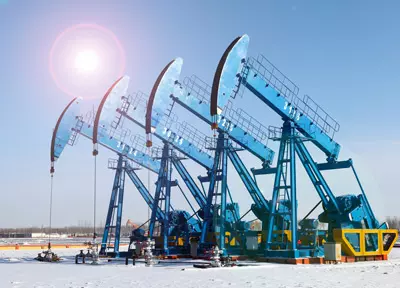
Wellhead production metering, oil/water/gas separation, production allocation, and artificial lift monitoring in onshore and offshore fields.
Wellhead metering
Water injection wells
Production allocation

Gas Processing & Treatment

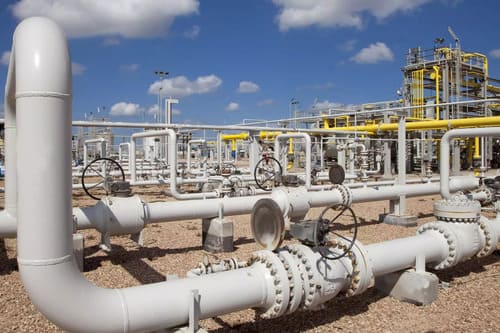
Inlet separator gas metering, dehydration unit measurement, NGL extraction flow control, compressor station suction / discharge, and sales gas custody transfer.
Inlet gas metering
Sales gas custody
Compression stations
NGL streams

Midstream Pipeline & Storage

Crude oil and product pipeline metering, pump station flow control, custody transfer stations, tank farm receipts and deliveries, and pig launcher/receiver monitoring.
Custody transfer
Tank farm metering
Pump station flow
Leak detection

LNG & LPG Terminals

Cryogenic LNG loading and unloading metering, LPG custody transfer, terminal storage inventory, and ship-to-shore transfer measurement under international fiscal protocols.
LNG load/unload
LPG custody
Mass-based billing

Downstream Refining

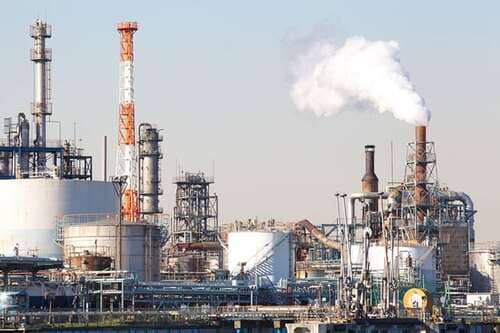
Crude unit feed metering, distillate product measurement, product blending control, reactor feed flow, steam distribution, and finished product loading rack metering.
Crude unit feed
Product blending
Loading rack
Refinery steam

Petrochemical & Specialty

Ethylene and propylene feed metering, aromatics flow control, specialty chemical dosing, process steam measurement, and utility metering across petrochemical complexe
Feed streams
Chemical injection
Aromatics processing
What Flow Measurement Covers

Three Fluid Categories Requiring Different Measurement Approaches

An oil and gas facility operates with three fundamentally distinct fluid categories simultaneously — each with different physics, different measurement principles, and different regulatory requirements. A single meter technology cannot cover all three.
Why instrument selection determines operational outcome

In oil and gas, the wrong flowmeter is not just inaccurate — it can be a safety risk, a fiscal liability, or a compliance failure. Matching instrument to service conditions determines whether measurement holds over the life of the field.

Measurement Challenges

Six Conditions That Define Flowmeter Selection in Oil & Gas

Each condition has a direct operational consequence when overlooked — not an abstract engineering problem.

Variable fluid composition invalidates volumetric meters over time

Crude API gravity shifts as reservoir conditions change. Produced water cut rises from 10% to 90% over a field's production life. Gas molecular weight changes with well age. Volumetric meters calibrated to initial fluid properties drift in accuracy as the fluid changes — but remain in service reading incorrectly. Mass-based meters (Coriolis, thermal mass) are immune to composition changes because they measure molecular flow, not velocity or differential pressure.
If overlooked: Production records systematically over- or under-state actual output as reservoir conditions change — a cumulative fiscal error that compounds over years without triggering any alarm.

Explosion-proof certification is a legal requirement, not a specification option

All measurement equipment installed in hazardous areas — Zone 1 (IECEx/ATEX), Division 1 (NEC), or equivalent — must carry current certification. An instrument without valid Ex certification cannot be legally installed, regardless of its measurement performance. Every HBYB instrument in the O&G product range carries ExdIICT6 Gb or ExiaIICT4 explosion-proof certification as standard. This is not optional on any O&G purchase order.
If overlooked: A non-certified instrument in a hazardous area is a regulatory violation that requires plant shutdown, instrument removal, and potential legal liability for the operating company.

Fiscal metering accuracy is regulated, not engineered to preference

Sales gas and crude oil custody transfer operate under API, AGA, or OIML regulatory frameworks that specify maximum permissible errors (MPE), mandatory calibration intervals, approved meter types, and required documentation. A meter that is simply accurate to ±0.5% does not automatically qualify for fiscal service — it must be of an approved type and calibrated against a traceable reference. Gas turbine meters (AGA-7), ultrasonic meters (AGA-9), and Coriolis meters are the approved types for custody metering in most jurisdictions.
If overlooked: Gas or crude oil measured by a non-approved or non-calibrated meter cannot be legally invoiced or purchased — a commercial and regulatory failure with significant financial consequences.

Corrosive and erosive service determines wetted material selection

Produced water carries H₂S, CO₂, chlorides, and fine sand at concentrations that attack carbon steel and 304SS within months. Crude oil may carry sand, scale, and wax. Selecting wetted materials for long-term chemical compatibility and erosion resistance determines whether meter accuracy holds over a 5-year maintenance interval. 316L SS, Hastelloy C, and PTFE/PFA linings serve different corrosion profiles — the correct choice depends on specific well chemistry, not generalized O&G industry practice.
If overlooked: Wetted part corrosion shifts the meter's calibration coefficient without any external indication — a silent accuracy drift that may only be discovered at the next scheduled calibration, years later.

Remote and offshore locations change the instrument specification requirements

Wellhead meters in remote fields and offshore platforms operate unmanned for months. Instruments must be battery-powered or solar-compatible, carry data via HART, Modbus, or GPRS, and survive without calibration for 12–24 months. Battery-powered electromagnetic meters, GPRS-enabled transmitters, and insertion meters maintainable through a pressurized hot-tap fitting are operational requirements in these environments — features that urban plant operators never consider but that determine whether a remote asset is operationally viable.
If overlooked: A meter that requires mains power or frequent on-site calibration becomes a site visit cost item that exceeds the value of the instrument within its first year of service in a remote location.

High-pressure service eliminates most common meter technologies

Water injection wells may operate at 10–40 MPa. HPHT wells produce fluids at 700 bar. Compressor discharge operates at 8–16 MPa. Most industrial meter types — vortex meters, standard turbine meters, ultrasonic clamp-on meters — are not rated for these pressures and cannot be deployed without risk of catastrophic failure. HBYB electromagnetic meters are rated to 42 MPa, making them one of the few full-bore technologies available for high-pressure injection and production service. V-Cone DP meters handle high-pressure gas service reliably due to their robust body construction.
If overlooked: Deploying a standard-pressure instrument in high-pressure O&G service is a pressure containment failure risk — with safety consequences that extend beyond the instrument to personnel and infrastructure.

Fluid Measurement Coverage Map

Where Measurement Occurs Across the Oil & Gas Value Chain

From wellhead to refinery product terminal — this map shows which fluid streams require measurement at each stage, and which meter families apply.
Stage 01
Upstream Production
Crude oil / water
Associated gas
Injection water
Coriolis (crude)
EM (produced water)
Gas Turbine (gas)
Stage 02
Separation & Treatment
Separator liquids
Produced gas
Chemicals
EM (water outlet)
Gas Turbine (gas)
Coriolis (chemicals)
Stage 03
Gas Processing
Sales / dry gas
NGL streams
Fuel gas
Gas Turbine (sales)
V-Cone (HP gas)
Thermal Mass (fuel)
Stage 04
Pipeline & Storage
Crude pipeline
Product pipeline
LPG / LNG
Ultrasonic (custody)
Turbine (products)
Coriolis (LPG/LNG)
Stage 05
Refining & Processing
Crude feed / products
Process steam
Cooling water
Turbine (products)
Vortex (steam)
EM (water)
Electromagnetic (Magnetic) Flowmeter
Vortex & Thermal Mass Flowmeter
Gas Turbine Flowmeter
Turbine Flowmeter (liquid)
Coriolis Mass Flowmeter
Ultrasonic & V-Cone DP

Application-to-Instrument Guide

Find the Right Flowmeter for Your Process

Select the fluid category that matches your measurement requirement. Each card explains the specific measurement challenge in that application, why the recommended instrument is the correct choice — and links directly to the product specification page.
01 - Wellhead & upstream production

Crude oil and condensate production metering where API gravity and water cut vary continuously

Wellhead streams carry crude of varying API gravity alongside produced water whose cut rises from single digits to over 80% as a field matures. Any meter that relies on constant fluid density for its calculation — differential pressure, turbine, vortex — will drift in accuracy as fluid composition changes without triggering any alarm. The only technology immune to this is direct mass measurement: Coriolis meters measure molecular flow, not velocity, and remain accurate regardless of API gravity, water cut, or slugging events.

Best fit: Variable water cut crude (0–95%), wellhead and separator liquid outlet, fields where fluid density is expected to change over the production life of the well.
Direct mass flow — density independent
Handles water cut 0–95%
Explosion-proof standard
Tolerates slugging & two-phase
Coriolis Mass Flowmeter →
02 - Pipeline & allocation metering

Custody transfer and production allocation on stabilized crude gathering lines and export pipelines

Pipeline crude metering operates on degassed, stabilized crude with a known density range. The priority shifts to fiscal accuracy — typically ±0.5% or better — and zero impact on line pressure. Electromagnetic flowmeters are the correct choice for high water cut or emulsified crude pipelines: they measure regardless of water cut and solids content, and produce no pressure drop. For very large diameter crude export headers where pipeline shutdown for meter installation is not permitted, insertion electromagnetic meters install through a hot-tap fitting without interrupting flow.

Best fit: Stabilized crude pipelines, separator liquid outlets, allocation metering stations, large-diameter crude headers where no pressure drop is acceptable.
Zero pressure drop
Handles emulsified crude
Up to 42 MPa rated
DN25–DN3000 coverage
Integrated Magnetic Flowmeter
03 - Terminal loading & truck/tanker transfer

Custody metering for tank truck loading racks, rail car filling, and tanker ship loading/unloading operations

Loading rack and terminal custody applications require fast, accurate batch totalizing with ±0.1% shot-to-shot repeatability that withstands legal-for-trade audits. The meter must be unaffected by flow rate surges during pump-in start-up and flow rate reductions during pump-out completion. Flanged turbine meters provide the high-frequency volumetric pulse output that batch loading controllers require, combined with custody-class accuracy — and are the industry standard for clean, stabilized petroleum product terminals. For crude oil terminals where water cut is variable, Coriolis mass meters are preferred.

Best fit: Clean, stabilized crude oil or petroleum product terminal loading duty. For variable-composition crude, see the Coriolis option above.
±0.5% accuracy
±0.1% repeatability
SIL-3 Explosion-proof standard
High-freq pulse for batch control
Flanged Turbine Flowmeter →
04 - Large-pipe retrofit metering

Adding custody or allocation metering to existing crude oil pipelines without pipeline shutdown or pipe cutting

Many existing crude oil gathering systems and export lines were built without metering stations and need metering added retroactively — but pipeline shutdown for full-bore flange installation may not be permitted under supply contracts or operating licenses. Clamp-on ultrasonic meters solve this by mounting externally on the existing pipe wall, with no pipe penetration, no pressure drop, and no process interruption. Measurements are taken through the pipe wall using transit-time ultrasonics, providing ±1–2% accuracy suitable for allocation and monitoring applications on existing infrastructure.

Best fit: Existing crude pipelines requiring added metering without shutdown. Note: custody transfer fiscal metering typically requires full-bore meter installation; clamp-on is used for allocation and verification duties.
Zero pipe penetration
No process shutdown
Temporary or permanent
Clamp-on exterior mount
Clamp-On Ultrasonic Flowmeter →
01 - Sales gas & fiscal custody metering

Wellhead gas production metering, sales gas fiscal stations, and allocation metering on gas gathering systems

Fiscal gas metering must report standard volume (Nm³, MSCF) rather than operating condition volume — because natural gas volume changes with pressure and temperature while mass and energy content do not. Gas turbine meters with integrated temperature and pressure compensation sensors calculate standard volume in real time, outputting Nm³/h directly. They achieve Class 5 (±0.5%) accuracy at operating pressures up to 6.3 MPa — the performance standard required for sales gas contracts and production reporting across upstream and midstream operations.

Best fit: Dry natural gas, fiscal sales metering, custody transfer stations, allocation metering at wellheads and gathering manifolds.
±0.5% Class 5 accuracy
Integrated T&P compensation
DUp to 6.3 MPa
Direct Nm³/h output
Gas Turbine Flowmeter →
02 - Flare & vent gas monitoring

Continuous mass flow measurement on flare headers and atmospheric vent stacks for emissions compliance reporting

Flare gas metering is mandated by environmental regulations in most producing jurisdictions (EPA Method 19 in the US, equivalent EU and national frameworks globally). The measurement challenge is extreme: normal operation may produce near-zero flow, while emergency blowdowns create surge flows that can exceed 100:1 of normal rate — a turndown requirement that eliminates turbine meters, vortex meters, and differential pressure meters. Large flare headers also range from DN200 to DN1000+, making full-bore meter installation impractical. Insertion thermal mass meters handle all of this: no pipe cutting (hot-tap installation), 200:1 turndown, direct mass flow output for emissions calculations, and operation down to near-zero velocity.

Best fit: Flare stack headers (DN200–DN2000), vent gas lines, emergency relief headers requiring wide-range mass measurement without pipe modification.
200:1 turndown ratio
Hot-tap insertion — no pipe cut
Direct mass flow (kg/h)
Insertion Thermal Mass Flowmeter →
03 - Fuel gas to turbines & fired heaters

Fuel gas supply metering to gas turbines, fired process heaters, boilers, and flare pilots

Fuel gas supply lines are relatively small-bore (DN25–DN150), carry dry clean gas at modest pressures, and require stable accurate flow for combustion efficiency and fired equipment protection. Over-fueling wastes energy and stresses equipment; under-fueling disrupts combustion stability. Gas turbine meters and inline thermal mass meters both serve this application accurately — inline thermal mass has the advantage of delivering direct mass flow (energy proportional) output without separate T&P transmitters, at a lower installed cost than a turbine meter with a full flow computer.

Best fit:: Dry fuel gas supply to combustion equipment, small-to-medium bore lines (DN25–DN200), applications where direct mass or standard volume output simplifies the control loop.
Direct Nm³/h or kg/h output
DN25–DN200
Explosion-proof standard
No external T&P transmitters
Inline Thermal Mass Flowmeter →
04 - High-pressure & wet gas at compressor stations

Gas metering at compressor suction/discharge, scrubber outlets, and transmission pipeline stations with pulsating or wet gas conditions

Compressor stations present the worst-case gas measurement scenario: high pressure (4–16 MPa), potential entrained liquid droplets after scrubbers, and pulsating flow from reciprocating compressor strokes that disrupts the signal of most meter technologies. The V-Cone differential pressure meter was specifically engineered for these conditions — its central cone produces a consistent, low-noise DP signal even in pulsating flow, handles wet or dirty gas without fouling or plugging, and its symmetric construction is unaffected by swirl or flow profile disturbances from compressor discharge geometry.

Best fit: High-pressure compressor station discharge and suction, wet or pulsating gas service, applications where turbine bearings or vortex shedding sensors cannot tolerate wet/dirty gas conditions.
High pressure (up to 42 MPa)
Wet & pulsating gas tolerance
Very short straight-pipe requirement
No moving parts
CV-Cone Flowmeter →
01 - Produced water disposal & treatment

Separator water outlet metering, produced water treatment plant throughput, and disposal well injection rate measurement

Produced water is a saline brine — typically 10,000–250,000 ppm TDS — and is therefore highly conductive: electromagnetic flowmeters are the natural first choice. The zero-obstruction bore is critical: produced water carries fine sand, scale particles, and oil droplets that would erode turbine blades or clog DP meter impulse lines within months. EM meters measure regardless of solids content, produce no pressure drop that could impair separator gravity separation, and their corrosion-resistant linings (PTFE, PFA, polyurethane) provide long-term chemical compatibility with aggressive brine chemistry. HBYB EM meters rated to 42 MPa cover high-pressure disposal injection duties.

Best fit: Produced water at all concentrations, separator water outlet, disposal well injection, water treatment plant inlet/outlet measurement.
Handles solids & sand
Zero pressure drop
Up to 42 MPa pressure rated
Corrosion-resistant lining options
Integrated Magnetic Flowmeter →
02 - Water injection well metering

Individual well injection rate control and metering for pressure maintenance and enhanced oil recovery water injection programs

Water injection programs inject seawater or treated produced water at wellhead pressures that can reach 40 MPa to maintain reservoir pressure or sweep oil toward production wells. Each injection well requires its own metering point to control injection rate per well and to document cumulative injection volumes for reservoir management models. HBYB high-pressure electromagnetic flowmeters — rated to 42 MPa across the full size range — are one of the few full-bore velocity technologies capable of this service. Their full-bore, zero-obstruction design also handles the fine particles common in injection water without creating erosion-driven calibration drift.

Best fit: High-pressure water injection wells (up to 40 MPa), individual well injection rate control, seawater and treated produced water injection.
Up to 42 MPa pressure rated
Individual well metering
PTFE / PFA lining options
Full bore — no erosion
Integrated Magnetic Flowmeter (High Pressure) →
03 - Large-diameter seawater & injection supply

Seawater intake, desalination plant feed, and large-diameter injection supply headers on offshore platforms and coastal facilities

Seawater supply systems on offshore platforms involve large-diameter headers (DN400–DN2000) carrying highly conductive seawater at moderate pressure. Installing full-bore flanged meters on these headers typically requires system shutdown and significant structural modifications. Insertion electromagnetic flowmeters — installed through a hot-tap ball valve fitting on the existing pipe — avoid all of this: they measure through a single probe insertion point, cover pipes from DN100 to DN3000, and can be installed and removed under pressure without process interruption. Their stainless steel probes resist seawater corrosion for extended service intervals.

Best fit: Large-diameter seawater supply (DN400+), injection supply headers, existing large pipes where full-bore installation is not feasible without shutdown.
DN100–DN3000 coverage
Hot-tap insertion — no shutdown
316L wetted for seawater
IP68 submersion rated
Insertion Magnetic Flowmeter →
04 - Chemical & inhibitor injection dosing

Continuous precision dosing of methanol, MEG, scale inhibitors, corrosion inhibitors, and biocides at wellheads and pipeline injection points

Chemical injection in oil and gas is safety-critical: insufficient methanol injection allows gas hydrate formation in subsea and cold-climate pipelines, blocking the line entirely; insufficient corrosion inhibitor accelerates well casing and pipeline wall loss at rates that can cause failure within months. These injection systems operate at very low flow rates — often milliliters to liters per hour — against the full pipeline pressure differential. Coriolis meters available from DN6 bore are the only technology that combines direct mass measurement, high differential pressure capability, and accurate measurement at these ultra-low flow rates. No other meter type covers this combination.

Best fit: All chemical injection duties — methanol, MEG, scale/corrosion/H₂S inhibitors, biocides. Very low flow rates against high pipeline pressure.
Very low flow (mL–L/hr)
High differential pressure
±0.2% accuracy
Coriolis Mass Flowmeter →
01 - Refined petroleum products — terminals & pipelines

Custody metering for diesel, jet fuel, naphtha, kerosene, and gasoline at storage terminals and product pipelines

Clean, degassed, low-viscosity petroleum products are the ideal service environment for turbine flowmeters. The fluid is single-phase, non-corrosive, and has a stable, predictable density at operating temperature — conditions under which turbine meters achieve their best accuracy and repeatability performance. Flanged turbine meters deliver ±0.5% custody accuracy with ±0.1% shot-to-shot repeatability at a significantly lower installed cost than Coriolis alternatives. Their high-frequency volumetric pulse output connects directly to loading automation systems, custody transfer computers, and batch controllers without additional signal conversion.

Best fit: Clean, stabilized, low-viscosity petroleum products (viscosity below 50 cSt at operating temperature). Diesel, jet fuel, naphtha, kerosene, gasoline.
±0.5% custody accuracy
±0.1% repeatability
High-freq pulse for batch control
Ex-proof standard
Flanged Turbine Flowmeter →
02 - LPG & LNG custody transfer

Mass-based fiscal metering for liquefied petroleum gas and cryogenic LNG at loading terminals, storage facilities, and ship transfer operations

LPG (propane/butane under pressure) and LNG (cryogenic methane) are both billed on a mass basis — not volume — because their density varies significantly with temperature. A meter that delivers only volumetric output requires a separate density meter and a flow computer to calculate mass, adding equipment and uncertainty to the custody measurement. Coriolis meters eliminate this complexity entirely: they measure mass flow directly, simultaneously measure fluid density (confirming product quality and enabling phase identification), and maintain accuracy across temperature variations during loading. For LNG service, cryogenic-grade Coriolis meters are the international custody transfer standard.

Best fit: LPG custody transfer (any phase), LNG loading/unloading, applications where mass billing basis and inline density measurement are required simultaneously.
Direct mass measurement
Inline density monitoring
±0.1% accuracy
Temperature independent
Coriolis Mass Flowmeter →
03 - Refinery product blending

Multi-component gasoline and distillate blending, additive injection, and refinery product formulation control

Product blending trains meter multiple streams simultaneously — base stocks, light cut, heavy cut, oxygenates, additives — and proportion them to a target blend specification. The quality of the final blend (octane number, sulfur content, flash point, viscosity) is determined entirely by the accuracy of each component’s ratio control. Coriolis meters on each blend stream provide mass flow with simultaneous density measurement, enabling both ratio control and inline blend quality verification. The absence of straight-pipe installation requirements is also significant in the congested piping of existing refinery blend headers.

Best fit: Blending trains requiring mass ratio control and inline density verification. Refinery product blending, additive injection, quality-critical formulation.
Mass + density simultaneously
No straight-pipe requirements
Inline blend quality verification
DN6–DN300 range
Coriolis Mass Flowmeter →
04 - Non-invasive metering on existing product lines

Adding flow measurement to existing liquid product pipelines without pipe cutting, process shutdown, or full-bore meter installation

Pipeline and terminal operators frequently need to add metering to existing product lines retroactively — either for product accountability, leak detection surveys, or verification against existing meters. Pipeline shutdown for full-bore flange installation may not be commercially or contractually permitted. Clamp-on ultrasonic meters mount on the exterior of the existing pipe wall with no pipe penetration, no process interruption, and no permanent structural modification. They measure through the pipe wall using transit-time ultrasonics, providing accuracy suitable for allocation, verification, and monitoring applications on both liquid hydrocarbon and process water services.

Best fit: Existing product pipelines requiring added metering without shutdown. Suited to allocation and verification duties; full-bore meter required for fiscal custody transfer.
Zero pipe penetration
No process shutdown
Portable or permanent
Suitable for liquid hydrocarbons
Clamp-On Ultrasonic Flowmeter →
01 - Steam injection for EOR & SAGD

High-pressure, high-dryness steam injection metering for thermal enhanced oil recovery and Steam-Assisted Gravity Drainage (SAGD) operations

Thermal EOR and SAGD operations inject high-quality steam at wellhead pressures of 6–20 MPa and temperatures of 250–340°C to heat bitumen or heavy crude, reducing viscosity and enabling production. The steam flow rate and steam quality (dryness fraction) together determine heat delivery to the formation and recovery efficiency. Multivariable vortex meters with integrated temperature and pressure measurement calculate steam mass flow and steam energy delivery in a single instrument — eliminating separate transmitters and a flow computer, and providing the real-time steam quality monitoring that EOR operations require for injection well optimization.

Best fit: Steam injection wells for SAGD, cyclic steam stimulation (CSS), steamflood EOR. High-pressure service up to 350°C. Steam quality and energy monitoring required.
Up to 350°C service temperature
Integrated T&P compensation
Direct energy output (kW or GJ)
No moving parts in flow path
Multivariable Vortex Flowmeter →
02 - Refinery process steam & energy sub-metering

Steam distribution to process units, distillation column stripping steam, and utility steam sub-metering across refinery operations

Refinery steam networks supply dozens of process consumers simultaneously — distillation stripping, reboilers, heat exchanger bundles, turbine drives, trace heating, and utility steam. Sub-metering consumption at each process unit with flanged or wafer vortex meters enables energy cost allocation by unit, identifies steam trap failures before they become significant losses (a steam trap failure is invisible to operators without a downstream meter), and provides the energy management data required under emissions and efficiency reporting frameworks. The wafer-connection vortex meter is particularly suited to existing refinery lines where replacing spool pieces is constrained by flange bolt patterns.

Best fit: Refinery steam distribution headers, process unit steam supply lines, steam trap monitoring. Saturated and superheated steam service up to 350°C.
DN15–DN3000 size range
Saturated & superheated steam
Wafer & flanged options
No moving parts
Flanged Vortex Flowmeter →
03 - Cooling water & process water circuits

Cooling tower distribution, heat exchanger cooling water circuits, firewater supply, and process water utilities at refineries and processing facilities

Cooling water and process water circuits are high-flow, continuously operating systems where any pressure drop from an installed full-bore meter adds to pump energy cost across the system lifetime. For large-diameter circuits (DN400+), insertion electromagnetic flowmeters — installed through a hot-tap fitting — measure with zero bore obstruction at a fraction of the cost of a full-bore flanged meter of equivalent size. For facilities where even the insertion hot-tap is not permitted (firewater systems, some cooling headers), clamp-on ultrasonic meters install externally with zero pipe penetration and zero pressure impact.

Best fit: Cooling tower circuits, heat exchanger cooling supply and return, firewater headers, large-diameter process water. Insertion or clamp-on options for no-modification installation.
Insertion — zero bore obstruction
DN100–DN3000
No process shutdown for install
Conductive water service
Insertion Magnetic Flowmeter →
04 -Methanol & chemical inhibitor injection

Precision continuous injection of methanol, corrosion inhibitors, scale inhibitors, H₂S scavengers, and biocides into wells, pipelines, and processing equipment

Chemical injection in oil and gas is a safety function: methanol prevents gas hydrate blockage in subsea pipelines; corrosion inhibitor prevents well casing and pipeline wall failure; scale inhibitor prevents production restriction in perforations and tubing. All of these operate at extremely low flow rates — milliliters to liters per hour — against the full system pressure. Coriolis meters, available from DN6, are the only technology that measures accurately at these flow rates under high differential pressure, with direct mass output that eliminates density conversion and provides the documented mass dose per injection event required for injection program verification.

Best fit: All O&G chemical injection duties. Methanol injection, MEG regeneration system metering, scale/corrosion/H₂S scavenger dosing, biocide injection.
From DN6 bore minimum
mL/hr to L/hr flow range
±0.2% accuracy
High-pressure injection service
Coriolis Mass Flowmeter →

Safety & Certification Standards

Built to Meet Oil & Gas Installation Requirements

The certifications and pressure ratings that O&G procurement specifications require — standard, not optional.

IECEx / ATEX Explosion-Proof

All O&G series instruments carry ExdIICT6 Gb or ExiaIICT4 explosion-proof certification as standard — legal compliance for Zone 1 and Zone 2 hazardous area installation without additional approval.

Up to 42 MPa Pressure Rating

HBYB electromagnetic flowmeters are pressure-rated to 42 MPa across the full size range — covering water injection, HPHT production, and high-pressure pipeline applications that most meter technologies cannot reach.

Corrosion-Resistant Wetted Materials

316L SS, Hastelloy B/C, titanium, tantalum, PTFE, PFA, and polyurethane wetted options cover the full range of O&G corrosion profiles — H₂S brine, CO₂ service, produced water, and aggressive chemical injection streams.

Remote Communication Standards

HART, Modbus RS485, 4–20mA, and GPRS communication options support both SCADA integration and battery-powered remote wellhead installations where mains power and continuous connectivity are unavailable.

Request application support

Tell Us Your Service Conditions, Let's Specify the Right Instrument.

Whether you're specifying a custody transfer meter, a high-pressure water injection instrument, a flare gas monitor, or a chemical injection Coriolis — describe your fluid, pressure, temperature, and accuracy requirement. We return a complete instrument specification with material compatibility documentation and certification details within 24 hours.
Response within 24 hours from a technical specialist, not a form letter
If a HBYB meter isn't the right fit for your application, we'll tell you so