

Fluid Measurement Solutions for Agriculture and Irrigation

Designed for irrigation scenarios, including pumping stations, mainline transport, zone control, fertigation, and water use monitoring.

Accurate flow data helps agricultural operators, irrigation managers, and project teams make better decisions across the entire water system. Whether the priority is allocation, consumption monitoring, compliance, or system optimization, the right flowmeter supports more reliable and efficient water management.
Discuss Your Application
Industry Segments We Support

Better Water Metering Begins with the Real Application

The pump station outlet, the irrigation canal, and the fertigation dosing line each carry water under entirely different physical conditions. Trying to use one instrument type for all three is how measurement problems begin.

Pressurized Pipes — Pumps, Mains & Distribution

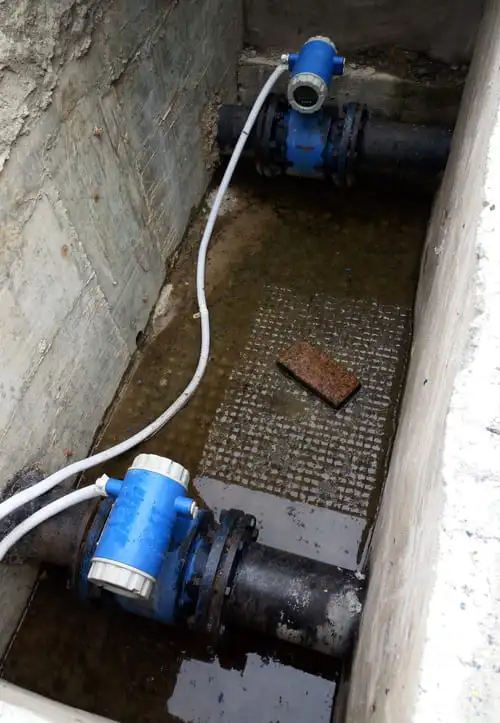
From pump station discharge through the supply main to zone distribution headers — all operating as closed pressurized pipes. Standard electromagnetic flowmeters apply here, but must handle the silt and suspended solids typical of raw agricultural water sources without clogging or erosion.
Pump station outlets
Supply mains
Zone headers
On-farm meters

Open Channels — Canals, Ditches & Drainage

Irrigation canals and drainage channels flow with a free water surface — not in a closed pipe. A standard flowmeter installed in an open channel produces no valid reading. Open channel flow demands completely different measurement technology for partially-filled and surface-flow conditions.
Irrigation canals
Delivery channels
Drainage ditches
Runoff collection

Dosing Lines — Fertilizer, Acid & Agrochemicals

Fertigation and pH adjustment inject concentrates into the irrigation stream at low flow rates through small-bore lines. These liquids are often corrosive, require chemical-resistant wetted materials, and demand precision that general-purpose meters cannot reliably maintain.
Liquid fertilizer injection
pH acid dosing
Micronutrient delivery
Agricultural water management is harder than it looks

emote locations, silty water, seasonal extremes, and regulatory pressure all converge on the same instrument. Most "standard" flowmeters are not designed for this combination.

Five Problems That Standard Industrial Meters Don't Solve

Why Agricultural Metering is Different

Awareness of these issues before specification prevents the most common and costly agricultural metering mistakes.

Silt and suspended solids destroy moving-part meters

River water, reservoir water, and recycled irrigation drainage all carry suspended silt, fine sand, and organic debris. Turbine meters and positive displacement meters — designed for clean industrial liquids — clog, erode, and drift out of calibration within a single irrigation season under these conditions. Full-bore electromagnetic meters have no internal obstruction to clog or erode, and measure accurately regardless of sediment concentration.
The consequence : Replacing moving-part meters mid-season is not just a cost — it means weeks of unverified water delivery during the most critical growth period.

Open channels need a completely different instrument

An irrigation canal is not a pipe. It operates with a free water surface, variable cross-section, and gravity-driven flow that changes constantly with season and weather. Every standard pipe flowmeter — electromagnetic, vortex, turbine — is designed for full-pipe pressurized conditions and will not produce a valid signal in an open channel. Dedicated open channel meters (electromagnetic probe or ultrasonic level/velocity) are the correct instruments for canals and drainage ditches.
If overlooked: Electrode coating causes output signal decay over weeks — a gradual reduction in indicated flow that operators may attribute to process changes rather than instrument fouling, until measurement reaches zero.

Remote pump stations have no power and no communication infrastructure

Field pump stations, canal turnout meters, and groundwater well heads are frequently located kilometers from the nearest grid connection, data network, and maintenance personnel. Instruments that require mains power or wired communication become infrastructure projects instead of meter installations. Battery-powered electromagnetic meters with integrated GPRS can transmit daily cumulative flow data to a central platform for up to five years without a site visit or battery replacement.
The consequence: A grid-powered instrument at a remote pump station multiplies total cost by 5–10× once trenching, cabling, and power supply infrastructure are factored in.

Water allocation meters must meet legal standards, not just technical ones

Many irrigation jurisdictions require on-farm extraction meters to be of a certified type, with tamper-evident sealing, non-resettable totalizers, and scheduled calibration documentation. A meter that measures accurately but lacks certification provides no legally defensible record for water rights compliance, utility billing disputes, or regulatory audits. Battery-powered electromagnetic meters with metrological sealing fulfill both the technical and legal requirements simultaneously.
The consequence: A non-certified meter cannot be used as evidence of compliance — the data it has recorded has no legal standing regardless of its technical accuracy.

Outdoor field conditions test instruments that indoor plants never encounter

Agricultural instruments live outside year-round. In Middle East and tropical climates, ambient summer temperatures reach 50–60°C around surface-mounted instruments. Monsoon seasons flood meter pits for weeks at a time. Dust, UV radiation, thermal cycling, and seasonal rodent activity all attack instruments that carry only standard IP65 industrial ratings. IP68 continuous-submersion-rated instruments with UV-stabilized housings and wide ambient temperature tolerance are not over-specified for agricultural field service.
The consequence: An IP65-rated field meter that floods during the monsoon season requires replacement during the irrigation period when availability is most critical.

Water Flow Coverage Map

From Source to Field — Where Every Meter Belongs

The complete agricultural water path has five distinct measurement opportunities. Missing any one of them leaves a gap in water accountability.
Source
Water Intake & Pumping
Pump station outlet
Groundwater well
Canal intake
Integrated EM
Battery EM (wells)
Insertion EM (large DN)
Distribution
Canal & Channel Network
Main canal
Farm delivery point
Drainage return
Ultrasonic OC
Magnetic OC
Field
Irrigation System
Drip / spray main
Zone headers
Center pivot inlet
Integrated EM (mains)
Clamp-On (zone pipes)
Battery EM (quota)
Inputs
Fertigation & Dosing
Fertilizer injection
pH acid dosing
Agrochemical lines
Threaded EM (fertilizer)
Threaded EM PTFE (acid)
Return
Farm Reuse & Waste
Tail-water return
Slurry / digestate
Livestock water
Integrated EM (return)
Battery EM (livestock)
Portable Ultrasonic (audit)
Electromagnetic Flowmeter — integrated, insertion, battery-powered
Open Channel Flowmeter — ultrasonic & magnetic
Clamp-On & Portable Ultrasonic Flowmeter
Threaded Magnetic Flowmeter — fertigation & dosing

Find the Right Meter for Your Application

What Are You Measuring? Start Here

Select the category that matches your measurement task. Each card identifies the specific challenge, explains the correct instrument choice, and links directly to the product page.
Primary measurement point

Pump station outlet — the single most important meter on a farm

The pump station discharge pipe carries 100% of the farm’s water supply. A meter here captures total abstraction for water rights compliance, enables energy-per-cubic-meter calculation, and provides the baseline from which all downstream losses are identified. Electromagnetic meters are the correct choice: they handle the silt and organic debris typical of raw agricultural sources without any obstruction, and their zero pressure drop avoids increasing pump energy consumption.
Best fit: Any pump station or groundwater well discharge where the water source is a river, reservoir, canal, or aquifer. Works with water of any turbidity without clogging.
Zero obstruction — handles silt
IP67/68 rated
DN25–DN1200
Integrated Magnetic Flowmeter →
02 - Remote groundwater wells

Wellhead metering with no grid power and no data network nearby

Groundwater wells are typically isolated — no mains power, no communication infrastructure, often checked only monthly. A conventional electromagnetic meter with a 24V supply and wired output is a non-starter. Battery-powered electromagnetic meters run for up to five years on internal lithium batteries and transmit daily cumulative totals to a cloud platform via integrated GPRS — turning an unmanned well into a remotely monitored metering station from day one.

Best fit: Groundwater wells, remote pump stations without grid power, sites where physical meter reading is costly or infrequent.
5-year battery life
IP68 rated
GPRS transmission
Battery-Powered Magnetic Flowmeter
03 - Large existing supply mains

Adding metering to large-diameter supply pipes without draining the system

Established irrigation systems often have supply mains of DN400–DN1200 installed without metering. Cutting in a full-bore flanged meter requires draining the system, cutting the pipe, and a multi-day commissioning process that may fall during the irrigation season. Insertion electromagnetic meters install through a hot-tap ball valve in one day — no system drainage, no pipe cutting, and no supply interruption — covering pipes from DN100 to DN3000 through a single probe point.

Best fit: Large-diameter supply mains (DN400+) where full-bore meter installation requires unacceptable downtime during the irrigation season.
no pipe cutting
DN100–DN3000
No system shutdown
Insertion Magnetic Flowmeter →
01 -District canals & large channels

Main irrigation canal flow — delivery scheduling and district water accounting

Irrigation district main canals carry millions of cubic meters per season and require continuous flow measurement for delivery scheduling, inter-district transfers, and seasonal volume accounting. Non-contact ultrasonic open channel meters mount above the water surface — they measure by acoustic signal and water level, with no installation in the wetted flow path, no hydraulic disturbance, and no maintenance requirement in the channel. They operate on solar or battery power at remote canal sites with GPRS data output.

Best fit: Main canals and large distribution channels where no hydraulic obstruction is permissible and remote unmanned operation is required.
Non-contact
Solar or battery powered
Handles flood & low-flow
Ultrasonic Open Channel Flowmeter →
02 - Farm turnouts & delivery channels

On-farm canal delivery point metering for individual allocation accounting

Farm delivery turnouts are where individual allocation volumes are recorded for billing or quota purposes. The water is silty and turbulent — conditions that conventional mechanical weirs handle poorly and that require frequent maintenance. Electromagnetic open channel flowmeters with a probe mounted in the channel floor measure average velocity across the cross-section, handle turbulent and sediment-laden water without clogging, and record cumulative volume with a tamper-evident totalizer for allocation billing.

Best fit: Farm delivery points, sub-lateral turnouts, secondary distribution channels where per-farm allocation must be recorded for billing or regulatory compliance.
Handles silty, turbulent water
Volumetric totalizer
IP68 Rated
Magnetic Open Channel Flowmeter →
03 - Drainage & return flow

Agricultural drainage channel monitoring for water balance and environmental compliance

Drainage channel flow measurement is required for farm water balance accounting, return flow credit calculations in water rights systems, and environmental compliance monitoring of agricultural discharge. Flows vary dramatically — near-zero during dry periods, bank-full after irrigation or rainfall. Ultrasonic open channel meters handle this 100:1+ range automatically, measuring both velocity and level to compute flow at any water depth without recalibration.

Best fit: Tile drain outlets, surface drainage ditches, farm runoff collectors. Any partially-filled channel with wide seasonal flow variation and environmental reporting requirements.
100:1+ flow range
Level + velocity
Near-zero flow detection
Ultrasonic Open Channel Flowmeter →
01 - Drip & micro-spray mains

Zone and block flow metering in drip and micro-irrigation systems

Modern drip and micro-spray systems are divided into hydraulic zones, each supplied through a pressurized distribution header. Metering each zone provides the data to identify under-irrigated blocks, detect emitter line leaks before they become water losses, and verify that each zone received its programmed dose. Electromagnetic meters on zone supply pipes handle the sediment and biological matter typical of non-filtered farm water without clogging — and their totalizing output feeds directly into irrigation scheduling software.

Best fit: Drip zone supply headers, micro-spray block supply, any pressurized distribution system where zone-level volume control and leak detection are required.
Per-zone volume control
Handles unfiltered water
Leak detection
Integrated Magnetic Flowmeter →
02 - Existing zone pipes — no pipe cutting

Adding zone metering to established orchards and vineyards without trenching

Installing full-bore meters in an established orchard or vineyard requires cutting lateral pipes — which in tree crops and vines means excavating around root systems. Clamp-on ultrasonic meters eliminate this entirely by attaching to the outside of the existing pipe wall with no pipe penetration, no soil disturbance, and no root damage. They measure through the pipe wall by acoustic transit-time and can be moved between zones for flow surveys before committing to permanent installations.

Best fit: Established tree crops, vineyards, and perennial systems where pipe trenching would damage root zones. Also used for temporary flow surveys across multiple zones before permanent meter placement.
Zero pipe penetration
External clamp-on
DN50–DN1200
Clamp-On Ultrasonic Flowmeter →
03 - Center pivot & sprinkler systems

Inlet metering and zone flow monitoring on center pivot and rotary sprinkler systems

Center pivot systems cover hundreds of hectares in a single rotation. An inlet meter at the pivot point confirms that total water delivery matches the programmed irrigation schedule — detecting pump under-performance, pipeline pressure losses, and application rate drift before they translate into crop stress. For multi-span pivots, flow monitoring at each span connection identifies nozzle wear and blockages that cause uneven application across the field.

Best fit: Center pivot inlet (DN100–DN300 typically), rotary sprinkler supply mains, large-area sprinkler systems requiring total application volume verification.
Pump performance monitoring
Total delivery verification
Handles raw water with solids
Integrated Magnetic Flowmeter →
01 -Liquid fertilizer injection

Fertilizer concentrate dosing — ratio control and per-season nutrient accounting

Liquid fertilizers are injected into the irrigation main at a target ratio to the water flow rate. The injection rate determines the nutrient concentration that reaches the crop root zone through the drip or sprinkler emitters. A flowmeter on the concentrate line confirms that the injector pump is delivering at the programmed rate — detecting pump wear, cavitation, and check valve failures before nutrient deficiency develops in the crop. It also provides per-season nutrient delivery records for agronomic accounting and regulatory reporting.

Best fit: N-P-K liquid fertilizer injection lines, humic acid supply, micronutrient solution metering. Small bore DN15–DN50 with corrosion-resistant lining for fertilizer solutions.
Fertilizer-compatible lining
Per-season nutrient accounting
Injector pump monitoring
Threaded Magnetic Flowmeter →
02 - pH acid and alkali dosing

Sulfuric or nitric acid injection for irrigation water pH correction

Alkaline irrigation water (pH 7.5–8.5) precipitates calcium carbonate scale that progressively blocks drip emitters — a problem in limestone aquifer regions and many surface water sources. Concentrated sulfuric or nitric acid is injected proportionally to the water flow to reduce pH to the 5.8–6.5 target range. The acid injection meter must be fabricated entirely from materials compatible with concentrated mineral acids — PTFE lining is mandatory. Standard electromagnetic meters with rubber or standard lining materials will degrade within weeks in acid service.

Best fit: Concentrated H₂SO₄ or HNO₃ injection for pH adjustment. PTFE or PFA lining essential — standard meter linings are incompatible with mineral acids.
PTFE lining — acid resistant
Hastelloy or titanium electrodes
Ratio control output
Threaded Magnetic Flowmeter (PTFE) →
03 - Irrigation water total

Legally certified extraction meters for water entitlement and allocation billing

Regulatory water allocation systems require metered extraction records that are tamper-evident, legally traceable, and meet defined accuracy standards. The meter must carry a non-resettable cumulative totalizer, be sealed against alteration, and be of an approved instrument type. Battery-powered electromagnetic meters fulfill all of these requirements — operating for up to five years without grid power, transmitting daily data via GPRS, and providing the regulatory certification documentation that water authorities require at the time of installation.

Best fit: On-farm water entitlement points, irrigation licensing compliance, water authority billing meters, aquifer management schemes.
5-year battery operation
Non-resettable totalizer
Tamper-evident sealing
Leak detection
Battery-Powered Magnetic Flowmeter
01 - Livestock drinking water monitoring

Per-barn water consumption tracking as an animal health and management indicator

A dairy cow reduces water intake by 25–30% in the early stages of heat stress, disease, or lameness — before clinical signs become visible. Daily water consumption per barn or pen group is one of the earliest and most reliable indicators of herd health and thermal comfort. Battery-powered electromagnetic meters on individual barn supply lines record daily consumption and transmit it to farm management software without daily site visits, providing a continuous health monitoring signal at a negligible cost per animal.

Best fit: Dairy parlour water supply, feedlot pen supply, poultry house drinking water. Remote and off-grid barn locations are typical — battery power avoids infrastructure cost.
Daily consumption logging
Battery powered — no grid
Health indicator monitoring
Battery-Powered Magnetic Flowmeter
02 - Agricultural wastewater & return flow

Drainage return water, slurry, and digestate application monitoring

Agricultural return water — tail-water recovery from irrigated fields — is increasingly metered to claim return-flow credits in water rights accounting and to document recycling rates for sustainability certifications. On large livestock farms, slurry and digestate applied to farmland must be volumetrically recorded to meet nitrogen and phosphorus application limits. Electromagnetic meters handle both clean return water and slurry containing suspended organic solids, with polyurethane lining options for erosive slurry service.

Best fit: Tail-water return pump stations, slurry application lines, digestate land-spreading pipes. Polyurethane lining recommended for slurry with high solids content.
Handles slurry & solids
Polyurethane lining for slurry
N/P application limit compliance
Integrated Magnetic Flowmeter →
03 - Water audit & loss survey

Non-invasive flow survey to locate leaks and quantify unaccounted water losses

Most irrigation systems lose 15–30% of pumped water to pipe leaks, uncontrolled overflows, and unmetered branches — but no one knows where until a meter is placed at each branch point. A portable clamp-on ultrasonic meter enables a complete water audit in a single day: attach transducers to the outside of each pipe section, read the flow, balance the supply and delivery volumes, and identify the loss location without cutting a single pipe or interrupting irrigation supply.

Best fit: Water loss investigations, meter verification surveys, temporary metering during system expansion, any situation where permanent pipe installation is not yet justified.
No pipe connection required
Deploy and read in minutes
DN50–DN1200
One meter — survey any pipe
Portable Ultrasonic Flowmeter →

Application Reference

Influent Metering, Sludge Flow Control, and NRW Reduction at a Regional Water Authority

These are the selection criteria that distinguish a pharmaceutical-grade instrument decision from a standard industrial one.

The Challenge

A regional water authority managing both drinking water distribution and wastewater treatment had three concurrent measurement problems: standard inline magnetic meters at the treatment plant influent were under-reading during low-flow night periods when the gravity sewer ran at 40–60% fill; primary sludge meters were failing every 8–12 months from abrasion; and 38% non-revenue water was being reported in the distribution network without any sub-meter data to identify which zones were responsible.

The Solution

Partially-filled electromagnetic meters (with integrated level sensing) replaced the standard meters at the treatment plant inlet works — solving the under-reading at low fill. Slurry-type electromagnetic meters with polyurethane lining replaced the worn primary sludge meters. Battery-powered electromagnetic meters with GPRS data transmission were installed at 12 zone boundary points in the distribution network, enabling district metered area analysis without power infrastructure at each sub-meter location.

The Outcome

Influent measurement accuracy across the full flow range was restored within the first week of operation. Sludge meter service life is expected to exceed 4 years — compared to the previous 8–12 month replacement cycle. DMA analysis from the 12 zone boundary meters identified two network segments responsible for 60% of the total NRW, enabling targeted repair to begin within the first monitoring period.

12

Flowmeters installed

IP68

All flowmeters — submersion rated

4yr+

Expected sludge meter service life

GPRS

Battery-powered, no mains needed

Technical Standards & Certifications

Built for Water & Wastewater Operational Environments

The specifications that water utility procurement and environmental regulators require — standard across the HBYB water sector range.

IP68 Submersion Protection

All water and wastewater series instruments carry IP68 as standard — rated for sustained submersion, enabling installation in buried valve chambers, manholes, and flooded meter pits without additional protection enclosures.

Battery-Powered Operation

Battery-powered electromagnetic meters with 3.6V lithium cells provide 5–8 years of operation with GPRS data transmission — eliminating power infrastructure requirements at remote zone boundary metering points and rural supply locations.

Corrosion & Abrasion Resistant Linings

PTFE, F46, PFA, polyurethane rubber, and neoprene lining options cover the full range of water and wastewater fluid conditions — from clean potable water to abrasive sludge with high solids loading.

SCADA & Remote Communication

4–20mA, HART, Modbus RS485, pulse output, and GPRS communication options support both traditional SCADA integration and modern remote monitoring platforms for water network management systems.

Request application support

Tell Us Your Application. We'll Specify the Right Flowmeters

Whether you're measuring raw sewage influent, specifying a sludge meter, planning a DMA sub-metering program, or selecting a chemical dosing instrument — describe your fluid, pipe size, and installation condition. We'll return a complete instrument specification within 24 hours.
Response from a technical specialist within 24 hours
Direct manufacturer pricing — no distributor margin